
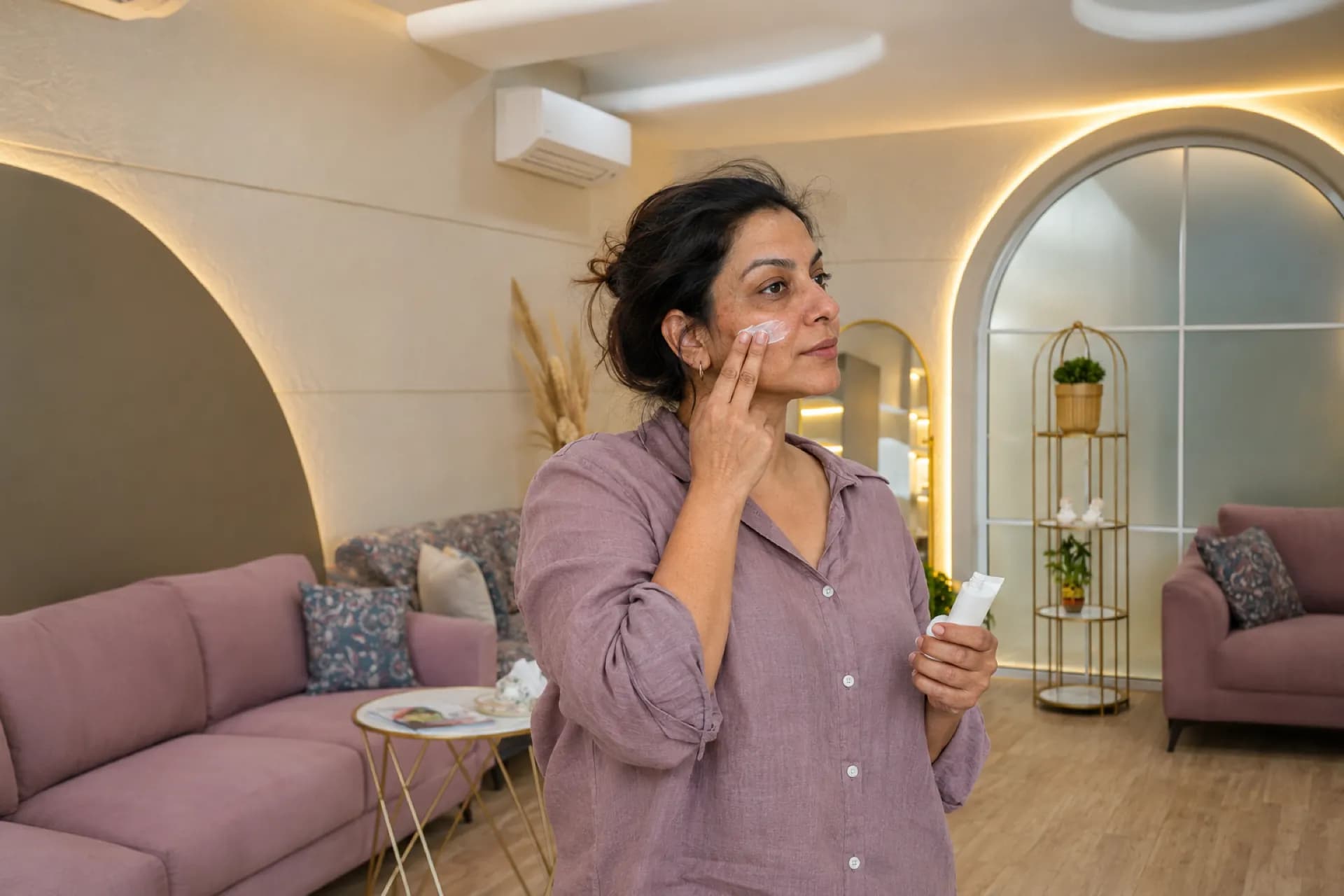
Pigmentation treatment starts with knowing which kind you have.
Sun spots, marks left by acne and melasma can look alike and behave very differently. A doctor identifies the type, and how deep it sits, before choosing a route.
Two taps, then WhatsApp. A doctor reviews your history before any treatment is suggested.
4.9 from 1,238 Google reviews(Delhi centre)Doctor-led since 2004
Pigmentation Treatment at a glance
- Indicative price
- ₹4,000–₹15,000 per session
- Sessions
- Often several, not one
- Spacing
- Weeks apart, set by your doctor
- Downtime
- Usually a few days of redness or flaking
- When to judge results
- In months, not weeks
- Works alongside
- Daily sun protection
What these figures mean
- Indicative price
- Delhi NCR range for peel and laser options; the type and depth decide the route.
- Sessions
- The number depends on the type, depth and how your skin responds.
- Spacing
- Skin needs time to recover between peels or laser sessions.
- Downtime
- Varies by treatment. Strict sun protection applies throughout.
- When to judge results
- A spot a few shades darker than your skin usually fades in 6 to 12 months once its cause stops (AAD).
- Works alongside
- AAD advises tinted sunscreen with iron oxide, SPF 30 or higher, for dark spots.
Indicative range in Delhi NCR. Your doctor confirms the plan and final price at consultation.Updated
The short answer
Pigmentation treatment depends on the type: sun spots, marks left by acne or injury, and melasma respond differently, and how deep the pigment sits matters too. A doctor identifies the type first, then may weigh creams, peels or selected lasers, always with daily sun protection. Indian skin is more prone to dark marks after procedures, so treatment is paced with care and fading takes months.
Is pigmentation treatment right for you?
Often suits
- Flat dark patches or spots on the face or body that have not faded on their own over several months.
- Marks left after acne, a burn or another injury, once any active breakout is under control.
- Sun spots, once a doctor has confirmed they are harmless.
- People ready to wear sun protection every day, which every plan needs.
May not suit
- A dark spot that is new, raised, bleeding or changing. It needs a doctor's examination first, before any pigment treatment.
- Symmetrical brown patches on the cheeks and forehead that darken with sun or hormones. These need the more cautious melasma approach.
- Pregnancy or breastfeeding, when many pigment treatments are deferred and a doctor decides what is suitable.
2 more reasons
- Active infection, irritated or broken skin, or a recent tan or sunburn in the area to be treated.
- Anyone expecting a lighter natural skin colour. Treatment aims to fade dark patches and even tone, not to change your colour.
How pigmentation treatment works by type and depth
Pigment is melanin, made by cells in the top layer of skin. Dark patches form when those cells make extra, because of sun, inflammation, hormones or some medicines and products. Where the melanin sits matters as much as how dark it looks. Pigment in the top layer, the epidermis, tends to respond more readily. Pigment deeper in the dermis, often blue-grey, responds slowly and can take years to fade, and many patches are a mix of both. The cause matters too. Sun spots build up over years of exposure. Marks after acne or injury follow inflammation and usually fade by themselves over months once the trigger stops. Melasma is driven by sun and hormones and tends to return. A doctor may weigh prescription creams that slow pigment production, chemical peels that speed up turnover of the surface layer, and selected lasers that target pigment. Indian skin (Fitzpatrick types III to V) is more prone to post-inflammatory hyperpigmentation, so a stronger treatment can leave a new dark mark. That is why the plan is staged and why sun protection comes first.
EpidermalIn the top layer
Looks like: Edges are well defined and the colour is a darker brown. Sun spots and many marks left by acne sit here.
What tends to help: Usually responds most readily, because treatments that work on the surface can reach it.
DermalDeeper in the skin
Looks like: Edges are blurred and the colour is light brown to blue-grey. Some melasma and some long-standing marks sit here.
What tends to help: Usually responds slowly or poorly. Fading can take years, and stronger treatment carries more risk.
MixedIn both layers
Looks like: Features of both: part of the patch looks sharp and brown, part looks blurred and grey-brown.
What tends to help: Part of the colour may respond and part may stay, so progress is judged over months.
- Brown pigment in the top layer
- Blue-grey pigment deeper down
Two patches that look alike can sit at different depths, so what works for one may not work for the other. A doctor judges depth by examining the skin, sometimes with tools such as a Wood's lamp or dermatoscope. This is general guidance, not a way to diagnose yourself.
How care runs at Clinic Eximus
The same order for everyone, so nothing is decided before the cause is clear.
Step 1
Consultation and history
Your doctor asks when the marks appeared and what came before: acne, an injury, pregnancy, a new medicine or product. They ask about sun habits and what you have already tried, including fairness or bleaching creams.
Step 2
Examination of type and depth
Marks are examined closely in good light to tell sun spots, post-inflammatory marks and melasma apart and to judge how deep the pigment sits. With your consent, photographs set a baseline for later comparison.
Step 3
A written plan with the price
If treatment suits you, the plan is set out in writing: what is being treated and why, the options, the number of sessions to start with, the per-session price and when you will be reviewed.
Step 4
Staged treatment and sun protection
Creams, peels or selected lasers are started gently, sometimes on a small test area, because Indian skin can darken after a procedure. Daily sun protection begins on day one.
Step 5
Review and maintenance
Progress is checked against your starting photographs. The plan is changed or paused if the skin is irritated or the marks are darker, and a maintenance routine is agreed once marks have faded.
What the research says
Published studies and guidelines, linked so you can read them yourself. Evidence is not a promise for any one person.
48 studies · 1,356 people. In 48 studies of 1,356 people with skin of colour, topical retinoids and lasers gave partial improvement of post-inflammatory marks in 85% and 66% of those treated. Only laser cleared marks completely, in 26% of that subgroup, and some people had darker marks after treatment. The authors found a lack of robust efficacy data. (Mar et al., Treatment of post-inflammatory hyperpigmentation in skin of colour: systematic review (PMC11514325), 2024) opens in a new tab
41 trials · 3,234 people. In 41 trials of sun spots (3,234 people), reported success ranged from 8% to 93% depending on the method and device, and definitions of success differed between studies. Most side effects were mild and short-lived. (Mardani et al., Treatment of solar lentigines: systematic review of clinical trials (PMC11948172), 2025) opens in a new tab
14 studies · 369 people. In 14 studies of 369 people, nearly all Asian with medium to brown skin, and almost all after laser treatment, sunscreen was the only measure that consistently prevented post-inflammatory darkening. (Mar et al., Prevention of post-inflammatory hyperpigmentation in skin of colour: systematic review (PMC12062726), 2025) opens in a new tab
1 more study
6–12 months. The American Academy of Dermatology says a dark spot a few shades darker than your natural colour usually fades within 6 to 12 months once its cause is stopped, colour that lies deep can take years, and treatment can speed fading. (American Academy of Dermatology: how to fade dark spots in darker skin tones, 2026) opens in a new tab
We will tell you if pigmentation is not the right first step for you.
Your first year
Typical milestones from published studies and guidelines. Your doctor sets your own schedule.
Week 0
Consultation, examination of type and depth, photographs
Weeks 1–4
Gentle start, sometimes on a small test area
Months 2–3
First review against your starting photographs
Months 6–12
Simple marks often fade; deeper colour can take years
Ongoing
Daily sun protection to keep what has faded
What to expect
- Fading takes months. A spot a few shades darker than your skin usually fades in 6 to 12 months once its cause stops, and deeper colour can take years.
- Depth decides how well pigment responds. Pigment in the top layer tends to fade more readily than pigment deeper in the skin.
- Pigment can return. No treatment prevents new pigment if the trigger, such as sun, hormones or repeated inflammation, continues.
- A careful plan can look slow. In Indian skin, irritation or an over-strong treatment can darken marks, so the safer route is gradual.
- The aim is to fade dark patches and even tone. A change in your natural skin colour is not the aim and is never promised.
Side effects and safety
- Indian skin (Fitzpatrick III to V) is more prone to post-inflammatory hyperpigmentation after peels and lasers. Settings are chosen conservatively, a test area may be used, and sessions are staged.
- Redness, stinging, dryness or flaking for a few days is common after a peel. Temporary darkening can occur before marks fade.
- Some creams irritate, and irritation can leave new dark marks. The AAD warns that some unlabelled skin-lightening products contain steroids or mercury, so tell your doctor everything you have used.
- Sun exposure after treatment raises the risk of darker marks. Sun protection is part of every plan.
- Tell your doctor if you are pregnant, breastfeeding or planning a pregnancy. Many treatments are deferred and a doctor decides.
Pigmentation treatment cost in Delhi
₹4,000–₹15,000
per session
Indicative range in Delhi NCR. Your doctor confirms the plan and final price at consultation.
What changes the cost
- The type and depth of pigment, which decide whether creams, peels or lasers are weighed.
- How many sessions are in your starting plan, and whether maintenance is planned.
- The size of the area being treated.
- Prescription creams or other medicines, which are a separate cost.
- Review visits, as set out in your written plan.
Questions people ask
Which treatment works for pigmentation?
It depends on the type and depth. Sun spots, marks left by acne and melasma respond differently, so a doctor identifies which you have first. They may then weigh prescription creams, chemical peels or selected lasers, always with daily sun protection. A treatment that suits one type can make another darker, which is why a plan starts with an examination, not a product.
How much does pigmentation treatment cost in Delhi?
Across Delhi NCR, pigmentation treatment with peel and laser options usually costs about ₹4,000 to ₹15,000 per session. Your total depends on the type and depth of pigment, how many sessions are in your plan and the area treated. Your doctor confirms the plan and final price in writing at consultation, before you commit to anything.
How do I know which kind of pigmentation I have?
You often cannot tell by eye. Marks that appear where a pimple or injury healed are usually post-inflammatory. Small flat spots on sun-exposed skin are often sun spots. Symmetrical blotchy patches that darken in summer may be melasma. A doctor examines the skin and judges depth. Our dark spots on face guide explains the types in plain terms.
Can pigmentation be removed permanently?
Some marks fade for good once their cause stops, such as marks after acne. Others, especially melasma, tend to return with sun, heat or hormones, and no treatment stops new pigment forming if the trigger continues. A doctor will tell you plainly which kind you have, what to expect, and how to keep results with daily sun protection.
Is laser treatment for pigmentation safe on Indian skin?
It can be suitable for selected people, but Indian skin (Fitzpatrick III to V) is more prone to post-inflammatory hyperpigmentation, which means a new dark mark after treatment. Reviews advise conservative settings, staged sessions and strict sun protection. Whether laser suits you depends on the type of pigment, its depth and your history, and a doctor decides after examining your skin.
How many sessions will I need?
Usually more than one, but there is no fixed number. It depends on the type and depth of pigment, the treatment chosen and how your skin responds. Your doctor sets a starting number in your written plan and reviews progress against your photographs. Fading is gradual, often over several months, and a plan can be changed or paused if the skin is irritated.
Can vitamin C or home remedies fade dark spots?
Vitamin C is one of several topical ingredients doctors may include in a plan, but it does not replace sunscreen, which the AAD puts first for dark spots. Anything that irritates skin can leave a new mark in Indian skin, so harsh scrubs and strong home remedies are risky. Ask a doctor what suits your type before starting a new product.
Can I have pigmentation treatment during pregnancy?
Usually it is deferred. Pregnancy often brings its own pigment changes, such as melasma, and many creams, peels and lasers are put off until after pregnancy and breastfeeding. Pigment that appears in pregnancy may fade a few months after delivery. Tell your doctor if you are pregnant, breastfeeding or planning a pregnancy, and they will decide what is suitable.
Read next
Article
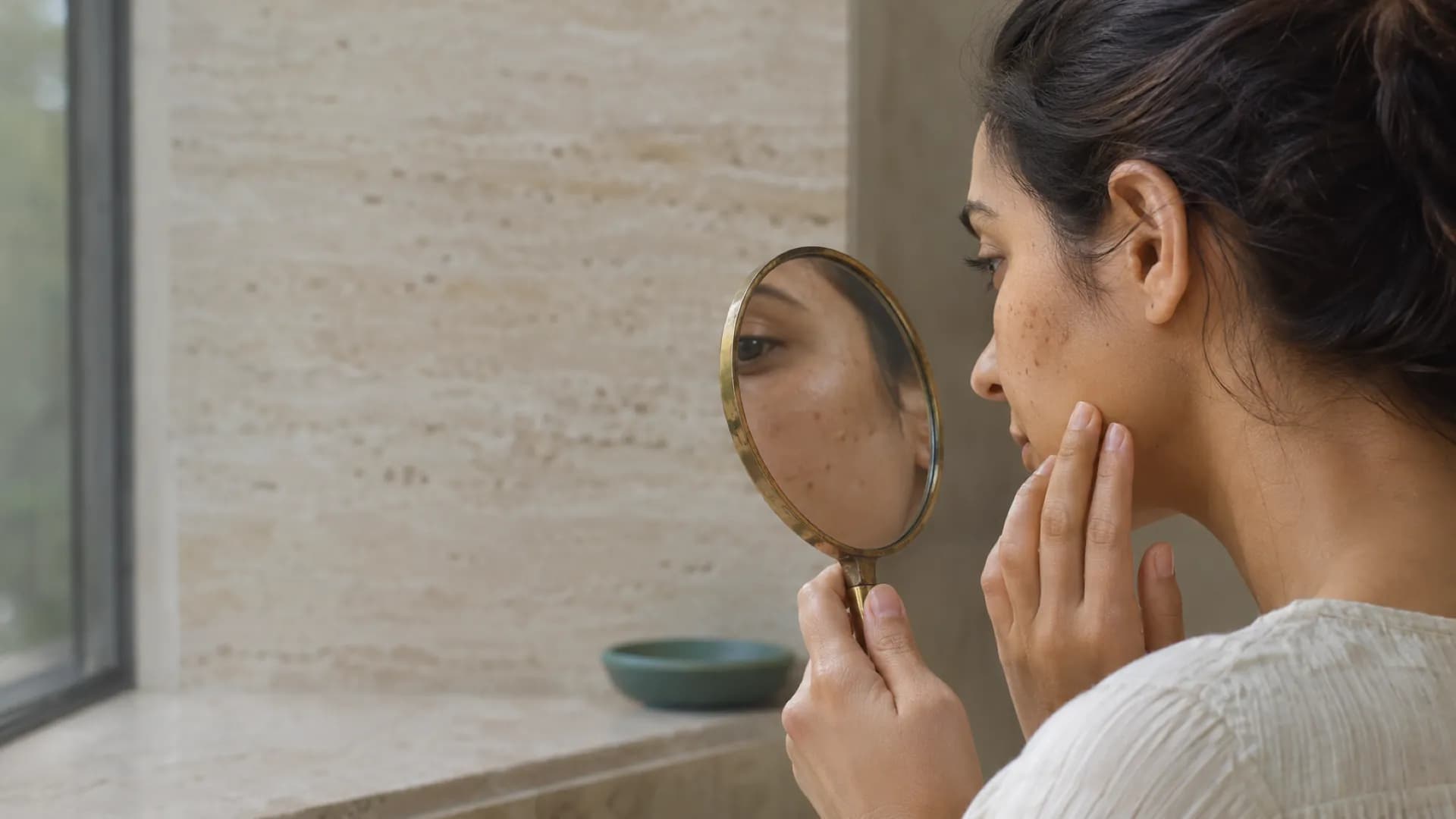
Dark Spots on Face: Causes, Types and What Helps
How to tell sun spots, marks left by acne and melasma apart, why depth in the skin matters, and what a doctor may suggest.
Article
Skin Lightening Treatment Cost in Delhi: What Affects It
What skin brightening treatment costs in Delhi NCR, what changes the total, what it can and cannot do, and the questions worth asking before you book.
Article
Pimple Treatment: Options, What Works, and When to See a Doctor
What helps active acne, what does not, which medicines are a doctor's decision and how to avoid scars. For marks and dips that remain, see acne scar treatment.

Find out which kind of pigment you have.
A doctor looks at your skin and what is behind the concern, then writes a plan with the full price before you begin.
Choose skin care, a centre and a time
Two taps. Nothing is stored on the website.
Your message opens in WhatsApp
You send it yourself and can add anything for the doctor.
The team confirms your visit
Your doctor reviews your history before suggesting anything.
4.9 from 1,238 Google reviews(Delhi centre)Doctor-led since 2004