
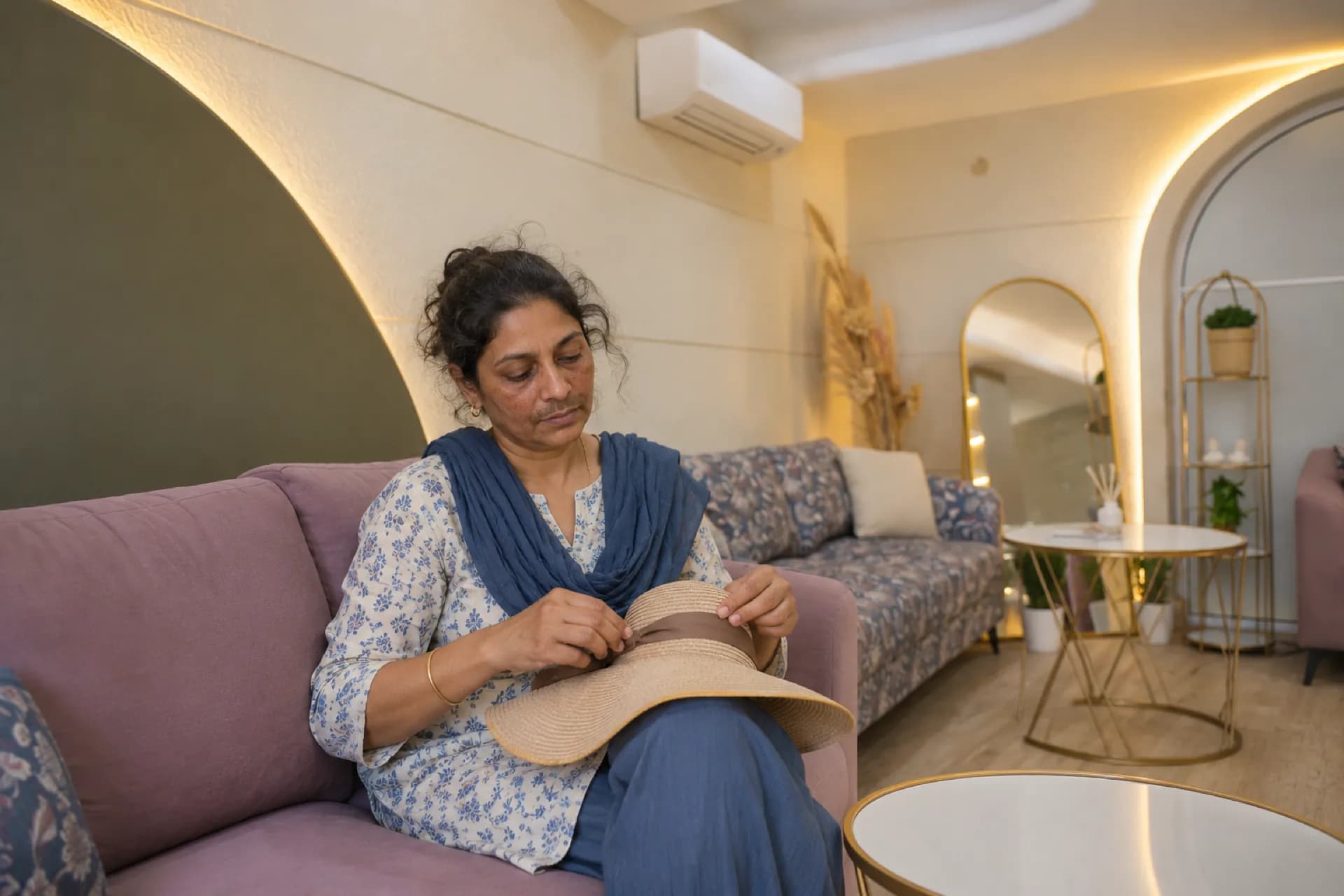
Melasma treatment aims to control it, because it tends to return.
Melasma is a long-term pigment condition that is sensitive to sun and hormones, and it is common in Indian skin. Treatment calms it and holds it back. It does not cure it, and sun protection is part of every plan.
Two taps, then WhatsApp. A doctor reviews your history before any treatment is suggested.
4.9 from 1,238 Google reviews(Delhi centre)Doctor-led since 2004
Melasma Treatment at a glance
- Nature
- Long-term, tends to return
- Goal
- Control, not cure
- Who is affected
- About 85% are women
- Sun protection
- Every day, all year
- When to judge results
- At 8 to 12 weeks, then ongoing
- Works alongside
- A doctor-led combination
What these figures mean
- Nature
- Even after a good result, pigment can come back with summer sun, hormones or pregnancy (DermNet).
- Goal
- The British Association of Dermatologists says there is no cure at present; treatment improves appearance.
- Who is affected
- In a 1,001-person Indian study; the average age was 38.
- Sun protection
- Tinted sunscreen with iron oxide added to results in a trial; AAD advises it.
- When to judge results
- Trials of creams and tablets measure change at 8 and 12 weeks. Relapse is watched for after.
- Works alongside
- Creams, sometimes tablets, peels or selected lasers, matched to your skin and history.
Updated
The short answer
Melasma is a long-term pigment condition driven by sun, hormones and family history, and it is very common in Indian skin. There is no cure at present, so treatment aims to fade the patches and keep them faded, usually with daily sun protection and prescribed creams, and sometimes tablets, peels or selected lasers that a doctor weighs against your skin and history. It often returns, so the plan is maintenance as much as treatment.
Is melasma treatment right for you?
Often suits
- Symmetrical brown or grey-brown patches on the cheeks, forehead, upper lip or jawline, once a doctor has confirmed they are melasma.
- People whose patches darken with sun, heat, pregnancy or hormonal medicines.
- People who have tried creams on their own without a diagnosis and want a doctor-led plan.
- Anyone ready for daily sun protection and long-term follow-up.
May not suit
- Pregnancy or breastfeeding, when many medicines and procedures are deferred. Melasma that begins in pregnancy may fade a few months after delivery.
- A history of blood clots or a clotting disorder, which a doctor screens for before considering tablets.
- Active skin infection, irritated or broken skin, or a recent tan or sunburn, when peels and lasers are put off.
2 more reasons
- A single dark spot on one side, or a spot that is changing. It needs examination for another cause first.
- Anyone expecting the patches to clear and stay clear without ongoing care.
Medical treatment for melasma: what a doctor weighs
Melasma happens when pigment cells in the skin make too much melanin. Several things switch them on. Ultraviolet light and visible light both do, and so do hormones: pregnancy and oestrogen- or progesterone-containing medicines are implicated in about one in four affected women. Family history is common, and in an Indian study longer exposure to cooking or workplace heat went with more severe melasma. The pigment can sit in the top layer, deeper in the skin or in both. Top-layer melasma usually responds better, and deeper melasma responds poorly. Melasma is also easily upset: heat, irritation or an over-strong treatment can make it darker. A doctor may weigh several options. Sun protection comes first, including tinted sunscreen with iron oxide for visible light. Prescription lightening creams, often a combination of a lightening agent, a retinoid and a mild steroid, are the most studied. Tranexamic acid, a medicine first used to stop bleeding, may be considered as tablets after screening for clot risk. Chemical peels and selected lasers can help some people but carry a risk of making melasma darker or rebounding, especially in Indian skin. Which options are right, if any, is a doctor's decision for you.
Four things can switch on the skin's pigment-making cells: sun and visible light, hormones, heat and family history. That produces brown or grey-brown patches that often return when the triggers return. A plan has three parts: protect from sun every day, fade the patches with treatment a doctor chooses, and hold the result with gentle care and regular reviews.
Triggers, patches and the three parts of a melasma plan- Sun and visible lightBoth ultraviolet and visible light switch pigment cells on.
- HormonesPregnancy, and hormonal pills or other hormone treatment, are linked to it.
- HeatIn an Indian study, longer cooking or workplace heat went with more severe melasma.
- Family historyAbout 6 in 10 people with melasma report an affected relative.
- ProtectTinted sunscreen with iron oxide, every day, plus shade or a hat.
- FadeCreams, and sometimes tablets, peels or selected lasers, as a doctor decides.
- HoldGentle skin care, no irritation, and reviews before the sunniest months.
There is no cure at present, so the aim is to keep the patches faded. General guidance; your doctor sets your plan.
How care runs at Clinic Eximus
The same order for everyone, so nothing is decided before the cause is clear.
Step 1
Consultation and history
Your doctor asks when the patches began, about pregnancies, hormonal pills or other hormone treatment, medicines, family history, sun and heat exposure, and every product you have tried.
Step 2
Confirm it is melasma, and judge depth
The skin is examined in good light to confirm melasma, rule out other causes and judge how deep the pigment sits. With your consent, photographs set a baseline.
Step 3
A written plan, sun protection first
The plan sets out daily sun protection, which creams are suitable, and whether tablets, peels or lasers should be considered at all. Pregnancy and breastfeeding status is part of the decision.
Step 4
Careful, staged treatment
Treatment starts gently, sometimes with a test area, and is paused if the skin is irritated. In melasma, doing less often protects the result.
Step 5
Review and maintenance
Progress is checked against your photographs, and a maintenance plan is agreed for when the patches fade, with a review before the sunniest months.
What the research says
Published studies and guidelines, linked so you can read them yourself. Evidence is not a promise for any one person.
1,001 people · 10 centres. In 1,001 people with melasma at 10 Indian centres, 85% were women and the average age was 38. Only about one in five (19.6%) used sunscreen, and longer exposure to cooking or workplace heat went with more severe melasma. (Sarkar et al., Clinical and epidemiologic features of melasma: multicentric study from India (PubMed 31187480), 2019) opens in a new tab
113 trials · 6,897 people. A review of 113 controlled trials (6,897 people) found triple combination cream and hydroquinone alone the most effective treatments. Peels and lasers gave mixed results, oral tranexamic acid looked promising for recurrent cases, and side effects were mostly mild irritation, with some post-inflammatory darkening. (McKesey, Tovar-Garza and Pandya, Melasma treatment: an evidence-based review (PubMed 31802394), 2020) opens in a new tab
68 people · 8 weeks. In 68 people given the same lightening cream, a sunscreen containing iron oxide to block visible light improved melasma scores 15% more than a UV-only sunscreen at 8 weeks. (Castanedo-Cazares et al., Near-visible light and UV photoprotection in the treatment of melasma: randomised trial (PubMed 24313385), 2014) opens in a new tab
3 more studies
28 trials. A meta-analysis of 28 randomised trials found oral tranexamic acid added to standard treatment improved melasma scores at 8 and 12 weeks. Topical and injected forms were not clearly better. The authors note the trials varied widely and more data are needed, including in different skin colours. (Panchal et al., Oral, topical and intradermal tranexamic acid in melasma: meta-analysis (PMC10810386), 2024) opens in a new tab
682 pairs · 120 days. In a matched cohort of 682 pairs, the rate of venous clots over 120 days was 1.6% both in people prescribed oral tranexamic acid for melasma and in those who were not. It is a record-based study, so a doctor still screens your history first. (Oral tranexamic acid for melasma and thromboembolism: matched cohort, JAAD International (PMC12621489), 2025) opens in a new tab
19% darker after laser. In a split-face trial of 21 women with phototypes III to V, adding laser to hydroquinone improved melasma more, but 19% developed post-inflammatory darkening on the laser side, mostly those with the darker skin in that range, and some had rebound pigment. (Lueangarun et al., Post-inflammatory and rebound hyperpigmentation after laser for telangiectatic melasma, phototypes III to V (PubMed 33002283), 2021) opens in a new tab
We will tell you if melasma is not the right first step for you.
Your first six months
Typical milestones from published studies and guidelines. Your doctor sets your own schedule.
Week 0
Diagnosis, depth, triggers and starting photographs
Weeks 1–4
Sun protection and gentle creams begin
Weeks 8–12
First review, when trials measure change
Month 6
Agree a maintenance plan together
Summer
Watch for relapse and step up protection
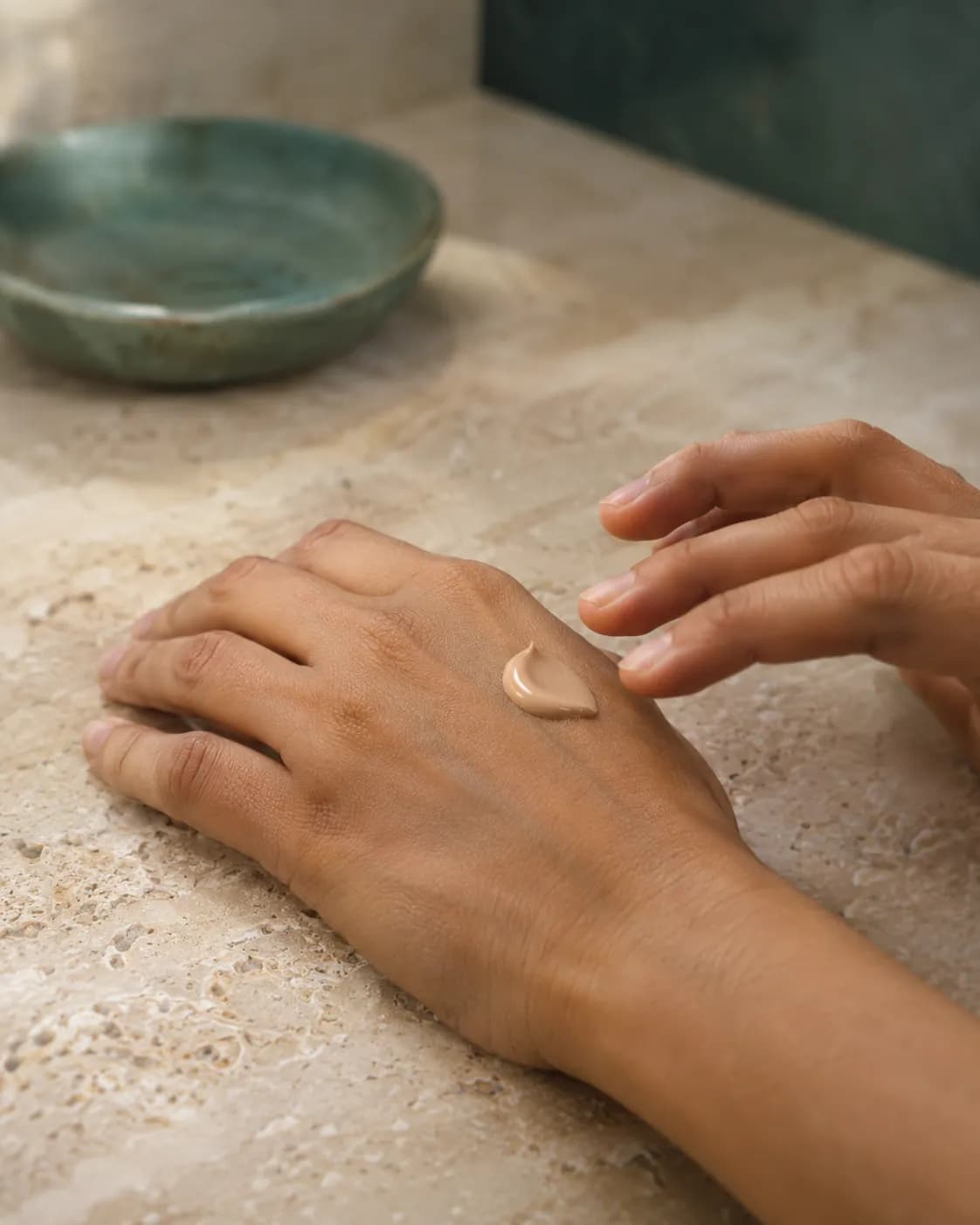
What to expect
- Melasma is controlled, not cured. At present there is no cure, and the patches often return after treatment stops.
- Return is common, even after a good result, with summer sun, heat, hormonal changes or pregnancy.
- Improvement is slower in darker skin. The AAD notes it usually takes longer to see results in darker skin tones.
- Stronger is not better. Heat, irritation and over-strong procedures can make melasma darker, so a careful plan can look slow.
- If melasma began in pregnancy it may fade a few months after delivery, so treatment may be deferred.
Side effects and safety
- Prescription creams such as hydroquinone, retinoids or steroid-containing combinations can cause irritation, dryness or redness. They are used only under a doctor's supervision and for a set period.
- Oral tranexamic acid is a prescription medicine first used to stop bleeding. Because it affects clotting, a doctor screens for a history of clots, clotting disorders, some hormone treatments and family history first. It is usually avoided in pregnancy and breastfeeding.
- Peels and lasers can make melasma darker or rebound, especially in Indian skin (Fitzpatrick III to V). A doctor may advise against them, or pace them with care and a test area.
- Avoid unlabelled fairness or bleaching creams. The AAD notes some contain steroids or mercury that can thin or permanently discolour skin.
- Tell your doctor if you are pregnant, breastfeeding or planning a pregnancy. Many treatments are deferred and a doctor decides.
What melasma treatment costs in Delhi
Your cost depends on the cause and the plan your doctor writes, which shows the full price before you begin.
What changes the cost
- How extensive the melasma is, and how deep the pigment sits.
- Whether your plan is creams and sun protection only, or also includes tablets, peels or lasers.
- The number of sessions, if procedures are part of your plan.
- Prescription creams or tablets, which are a separate cost, and any checks a doctor asks for before prescribing.
- Review and maintenance visits, which are part of managing melasma over time.
Questions people ask
Can melasma be cured completely?
No. The British Association of Dermatologists says there is no cure for melasma at present, though treatment can improve how it looks. Even when patches fade well, they often return with sun, heat, hormonal changes or pregnancy. The aim is to control it: fade the patches, then keep them faded with daily sun protection and regular review. A doctor will set expectations honestly before you start.
Why does melasma keep coming back?
The skin's pigment cells stay sensitive to triggers even after treatment fades the patches. Summer sun, visible light, heat, hormonal changes and pregnancy can switch them on again. In a 1,001-person Indian study only about one in five people used sunscreen. Daily tinted sunscreen, gentle care and a review before the sunniest months are what hold results.
Is laser treatment for melasma safe on Indian skin?
It carries real risk. Indian skin (Fitzpatrick III to V) is prone to post-inflammatory darkening, and melasma can rebound after laser. In one trial of 21 women with phototypes III to V, 19% developed dark marks on the laser side. A doctor may advise creams and sun protection first, or pace any laser with care, a test area and staged sessions.
Is tranexamic acid safe for melasma?
Oral tranexamic acid can help some people, and a 2025 matched cohort of 682 pairs found the same 1.6% clot rate over 120 days with and without it. It is still a prescription medicine that affects clotting, so a doctor screens your history for clots, clotting disorders and hormone treatments first. It is usually avoided in pregnancy and breastfeeding. Never start it on your own.
What does melasma treatment cost in Delhi?
There is no single price, because plans differ. Cost depends on how extensive the melasma is, whether your plan is creams and sun protection alone or also includes tablets, peels or lasers, how many sessions you need, and review visits over time. Your doctor confirms the plan and final price in writing at consultation, so you know the full cost before you begin.
Will melasma go away after pregnancy?
It may. The British Association of Dermatologists says melasma that begins in pregnancy may go away a few months after delivery, so treatment is sometimes not needed. It can come back in another pregnancy. Many treatments are deferred during pregnancy and breastfeeding, and a doctor decides what is suitable for you, including sun protection that is safe to use.
I wear SPF every day and still got melasma. Why?
Ultraviolet protection alone may not be enough. Visible light and heat can also trigger melasma, and in a trial a sunscreen with iron oxide to block visible light improved melasma scores 15% more than a UV-only sunscreen. Hormones and family history also play a part. Ask your doctor about a tinted sunscreen with iron oxide, a hat, and the other triggers in your life.
Can I treat melasma myself with tretinoin or azelaic acid?
It is a common question, but self-treatment risks irritation, and irritation can make melasma darker. Prescription creams are chosen by type and depth, used for a set period and reviewed. A doctor also checks that it is melasma and not another condition. Starting with a diagnosis usually costs less than months of trial and error, and tells you whether stronger options are suitable at all.
Read next
Article
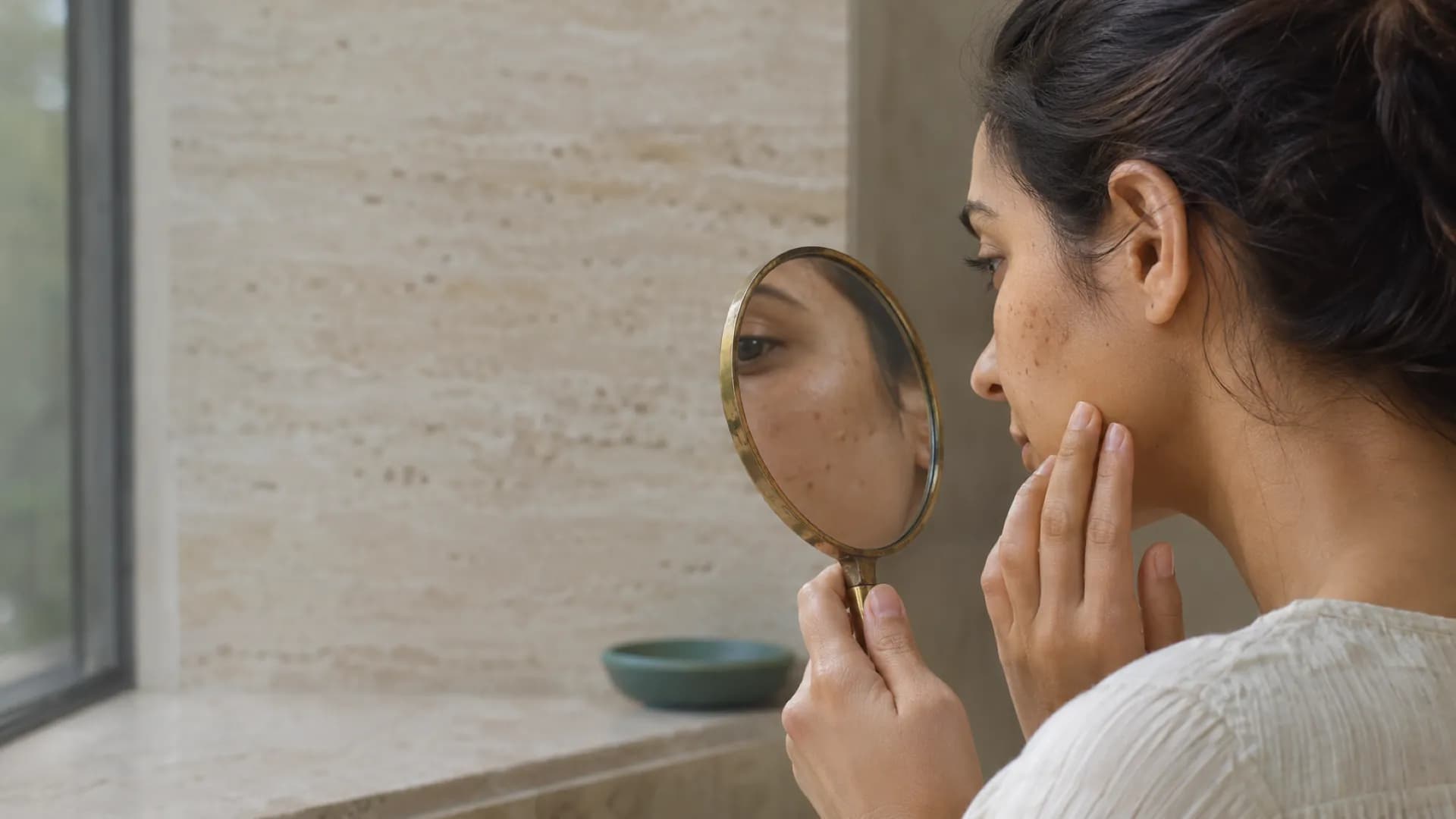
Dark Spots on Face: Causes, Types and What Helps
How to tell sun spots, marks left by acne and melasma apart, why depth in the skin matters, and what a doctor may suggest.
Article
Skin Lightening Treatment Cost in Delhi: What Affects It
What skin brightening treatment costs in Delhi NCR, what changes the total, what it can and cannot do, and the questions worth asking before you book.

Get a diagnosis before you buy another cream.
A doctor looks at your skin and what is behind the concern, then writes a plan with the full price before you begin.
Choose skin care, a centre and a time
Two taps. Nothing is stored on the website.
Your message opens in WhatsApp
You send it yourself and can add anything for the doctor.
The team confirms your visit
Your doctor reviews your history before suggesting anything.
4.9 from 1,238 Google reviews(Delhi centre)Doctor-led since 2004