

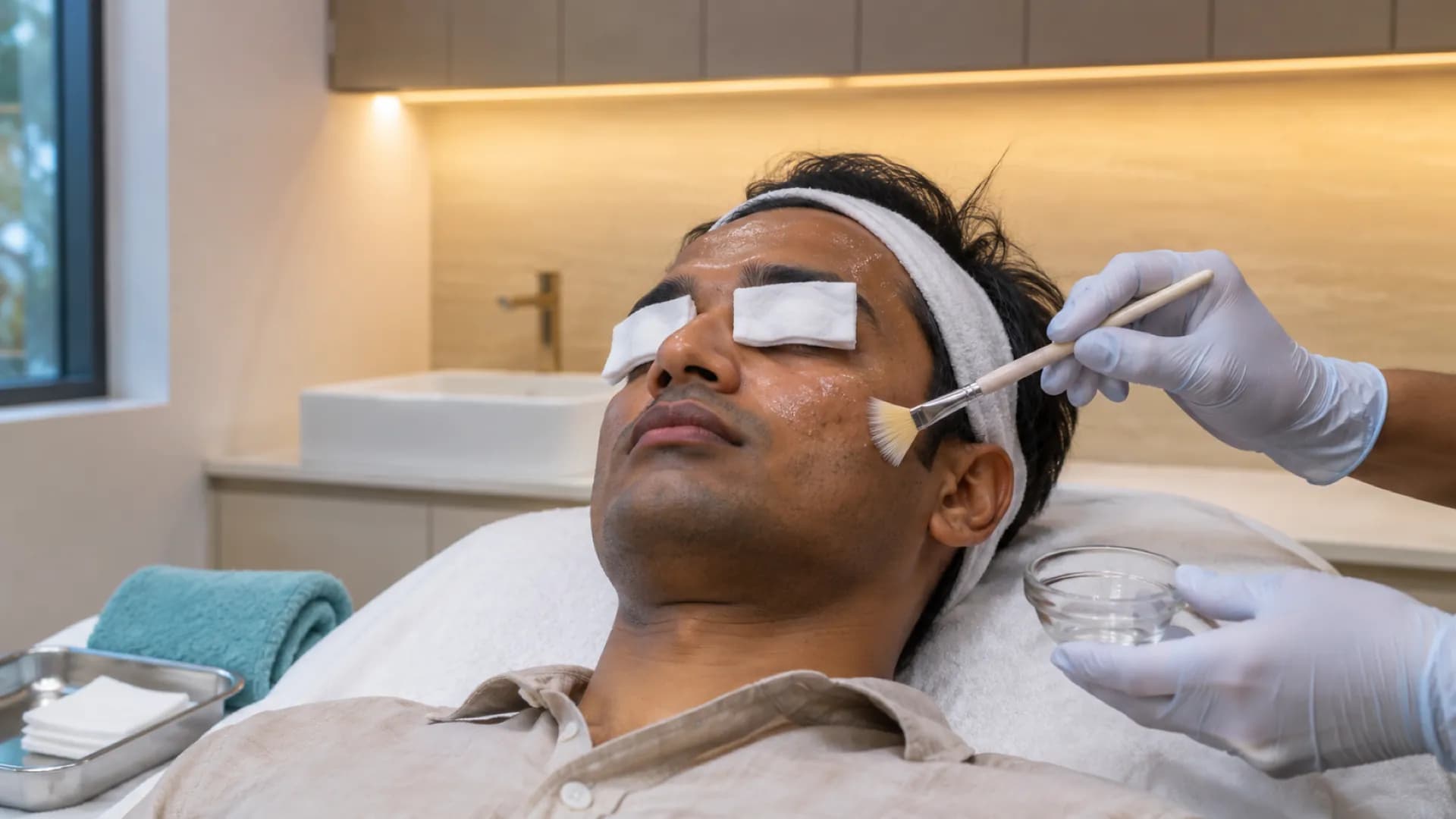
Chemical peels: the depth and the acid matter more than the name on the menu.
A peel uses an acid to lift away the top layers of skin, so the depth and the acid matter more than the name. We choose both for your concern and skin type, prepare the skin first and say plainly what a peel will not do.
Two taps, then WhatsApp. A doctor reviews your history before any treatment is suggested.
4.9 from 1,238 Google reviews(Delhi centre)Doctor-led since 2004
Chemical Peels at a glance
- Price
- ₹2,999 per session
- Sessions
- Usually a series
- Interval
- A few weeks apart
- Downtime
- Days for superficial, about a week for medium
- Priming
- 2 to 4 weeks before
- Reaches
- Pigment in the top layer
What these figures mean
- Price
- Clinic Eximus price for a peel. Cosmelan is quoted as a protocol after assessment.
- Sessions
- Results build with repeated peels, and maintenance may follow. Your doctor sets the number.
- Interval
- Trials of superficial peels often repeat them every 2 weeks; your doctor decides.
- Downtime
- DermNet NZ: mild redness settles within 48 hours for superficial peels.
- Priming
- Indian guidelines advise priming the skin to lower the risk of dark marks.
- Reaches
- Peels reach acne, tan and surface pigment well, and deeper pigment poorly.
Clinic Eximus price. Your doctor confirms the plan and final price at consultation.Updated
The short answer
A chemical peel applies an acid to lift away the outer skin so newer skin shows. Superficial peels are the usual choice for acne, tan and patchy tone, and Indian guidelines consider them safe when matched to the person. Medium-depth peels need great caution in Indian skin and deep peels are not recommended, so a doctor chooses the peel, primes your skin and sets the number of sessions.
Is a chemical peel right for your skin?
Often suits
- People with mild to moderate acne or acne marks who want a procedure alongside a doctor-led acne plan.
- Tan, sun-related patches and uneven tone, and pigment that sits in the top layer, such as some melasma, once a doctor has examined the skin.
- Dull or rough surface texture and fine surface scarring.
- People who can protect their skin from the sun every day, before and after each peel.
- People with stubborn pigmentation whom a doctor judges suitable for a stronger protocol such as Cosmelan, and who can accept a recovery period.
May not suit
- Active infection, a cold sore, an open wound or an eczema flare in the area.
- Pregnancy or breastfeeding, when many peel ingredients are deferred and a doctor decides.
- A fresh tan or sunburn, or taking isotretinoin, until a doctor confirms the skin is ready.
4 more reasons
- A history of keloid or raised scars, or of dark marks after minor injury, which needs assessment first.
- Pigment that sits deeper in the skin, which peels reach poorly and which is riskier to treat harder.
- Anyone who needs unmarked skin within a week or two of a medium peel or Cosmelan.
- Skin that cannot be kept out of strong sun for the weeks after a peel.
Chemical peeling treatment: superficial, medium and Cosmelan
A peel is a controlled, timed injury: the acid loosens the outer skin, the treated layer sheds and the skin rebuilds from below. Depth decides everything. Superficial peels, such as glycolic or salicylic acid, suit acne, tan and uneven tone. Medium-depth peels, such as trichloroacetic acid, go deeper and bring a week of swelling and peeling. Deep peels carry risks including scarring and are not recommended for Indian skin. Pigment in the top layer responds to peels, deeper pigment poorly. Cosmelan is a branded protocol from Mesoestetic: a mask applied in clinic and washed off later, then a home cream for weeks. It is used for stubborn pigmentation, sits at the stronger end for irritation, and has thin independent evidence; the nearest study tested its sister product, Dermamelan, in ten women.
How care runs at Clinic Eximus
The same order for everyone, so nothing is decided before the cause is clear.
Step 1
Consultation and skin assessment
Your doctor examines your skin and asks about acne, pigment history, pregnancy plans, medicines including isotretinoin, cold sores, keloid tendency and sun exposure. They decide whether a peel suits you at all, and at what depth.
Step 2
Priming the skin
For two to four weeks beforehand you may be asked to use sunscreen and creams your doctor prescribes. Your doctor tells you when to stop them before the peel. Do not start any of them on your own.
Step 3
The peel, in clinic
The acid is applied in a timed layer under a doctor's supervision, then removed or neutralised as that peel requires. Stinging or burning during it is common.
Step 4
Aftercare and sun protection
Skin tightens, darkens slightly and flakes over the following days. Do not pick it, keep it moisturised, and use sunscreen every day. Medium peels and Cosmelan need closer instructions.
Step 5
Review and maintenance
Your doctor reviews progress against your starting photographs, decides whether to repeat the peel and plans maintenance. Melasma in particular needs a long-term plan.
What the research says
Published studies and guidelines, linked so you can read them yourself. Evidence is not a promise for any one person.
Indian guideline · 2008. An Indian guideline says superficial peels are considered safe in Indian patients, medium-depth peels need great caution in dark skin, and deep peels are not recommended. It calls priming with sunscreen and, where prescribed, hydroquinone and tretinoin for 2 to 4 weeks essential, and says repeat and maintenance peels may be needed. (Standard guidelines of care for chemical peels, Indian Journal of Dermatology, Venereology and Leprology, 2008) opens in a new tab
473 peels · 3.8% complications. In a five-year review of 473 superficial peels in skin types III to VI at one centre, 18 (3.8%) had a complication. The most common were crusting (2.3%), dark marks (post-inflammatory hyperpigmentation, 1.9%) and redness (1.9%). All resolved within 8 months. Skin type VI carried higher odds of side effects. The study was retrospective and at a single centre. (Vemula et al., Assessing the safety of superficial chemical peels in darker skin, J Am Acad Dermatol (PubMed 29518457), 2018) opens in a new tab
13 studies · 478 people. A meta-analysis of 13 comparative studies (478 people with melasma and darker skin) found glycolic acid peels reduced melasma scores more than trichloroacetic acid peels. Peels worked as a single agent but need maintenance with creams afterwards. (Dorgham et al., chemical peeling as a single agent for melasma in dark-skinned patients: systematic review and meta-analysis, J Cosmet Dermatol (PubMed 32947652), 2020) opens in a new tab
3 more studies
Expert consensus · 2017. A consensus of 15 South Asian pigment experts calls peels a second-line option for melasma, mainly for pigment in the top layer. They discourage deep peels in skin types IV to VI, and stress selection, priming, counselling and maintenance creams to limit dark marks. (Chemical peels in melasma: review with consensus recommendations by the Indian Pigmentary Expert Group, Indian J Dermatol (PMC5724304), 2017) opens in a new tab
12 trials · 387 people. In 12 randomised trials (387 people) of peels for mild to moderate acne, no peel was clearly better than another, and glycolic acid beat placebo. Peels were generally well tolerated, with burning, redness and scaling. The trials were small and of low to moderate quality. (Chemical peels for acne vulgaris: a systematic review of randomised controlled trials, BMJ Open (PMC5931279), 2018) opens in a new tab
10 women · open-label pilot. A 2011 open-label pilot of Dermamelan, a sister product to Cosmelan from the same company, in 10 women with melasma (skin types II to IV) reported about 50% improvement in melasma scores and mild irritation. It was small, short and had no comparison group, so it cannot show how Cosmelan itself performs. (Tsilika et al., pilot study of Dermamelan (Mesoestetic) for melasma with reflectance confocal microscopy, J Drugs Dermatol (PubMed 22052305), 2011) opens in a new tab
We will tell you if chemical peel is not the right first step for you.
What a peel series looks like
Typical milestones from published studies and guidelines. Your doctor sets your own schedule.
Weeks −4 to 0
Priming and daily sunscreen, if your doctor advises
Day 0
Peel applied in clinic, under a doctor's supervision
Days 1–7
Tightness, dryness and flaking; medium peels and Cosmelan take longer
Weeks 2–6
Next peel in the series, if planned, once skin has healed
Month 3
Review against starting photographs; plan maintenance

What to expect
- Peels can fade dark patches and acne marks, even out tone and smooth the surface. They do not change your natural skin colour.
- Most plans are a series, followed by maintenance, because results build with repeat treatment.
- Melasma often returns after peels stop, so maintenance creams and daily sunscreen are part of the plan, not an extra.
- Peeling and flaking are the peel working, and picking at them can leave marks.
- Deep pigment, deep scars and wrinkles respond poorly to superficial peels, and stronger is not better in Indian skin.
Side effects and safety
- Indian skin (Fitzpatrick types III to V) is more prone to post-inflammatory hyperpigmentation after peels. Guidelines advise superficial peels, great caution with medium-depth peels and avoiding deep peels, with priming beforehand and daily sunscreen after.
- Burning, stinging, redness, tightness and flaking are common after a peel and usually settle in days.
- Less common effects include infection, a cold sore flare, persistent redness, lighter or darker patches and, rarely, scarring. Tell your doctor if you get cold sores.
- Irritation can itself cause darkening, which is why strong protocols such as Cosmelan need close aftercare and why you should not add other active products.
- Tell your doctor if you are pregnant, breastfeeding, planning a pregnancy, or taking isotretinoin. A doctor decides, and many peels are deferred.
- Contact the clinic if you notice spreading redness, blisters, pus, fever, or pain that is getting worse.
Chemical peel price in Delhi
₹2,999
per session
Clinic Eximus price. Your doctor confirms the plan and final price at consultation.
What changes the cost
- The type and depth of peel, and whether it is a standard peel or a branded protocol such as Cosmelan.
- The area treated, such as face, neck or body.
- How many sessions are in your starting series.
- Priming and aftercare products, including sunscreen.
- Treating acne or pigment alongside the peel, which is a separate cost.
Pairs with this care
Care to use between visits, chosen by the clinic. Confirm the right one with a doctor.
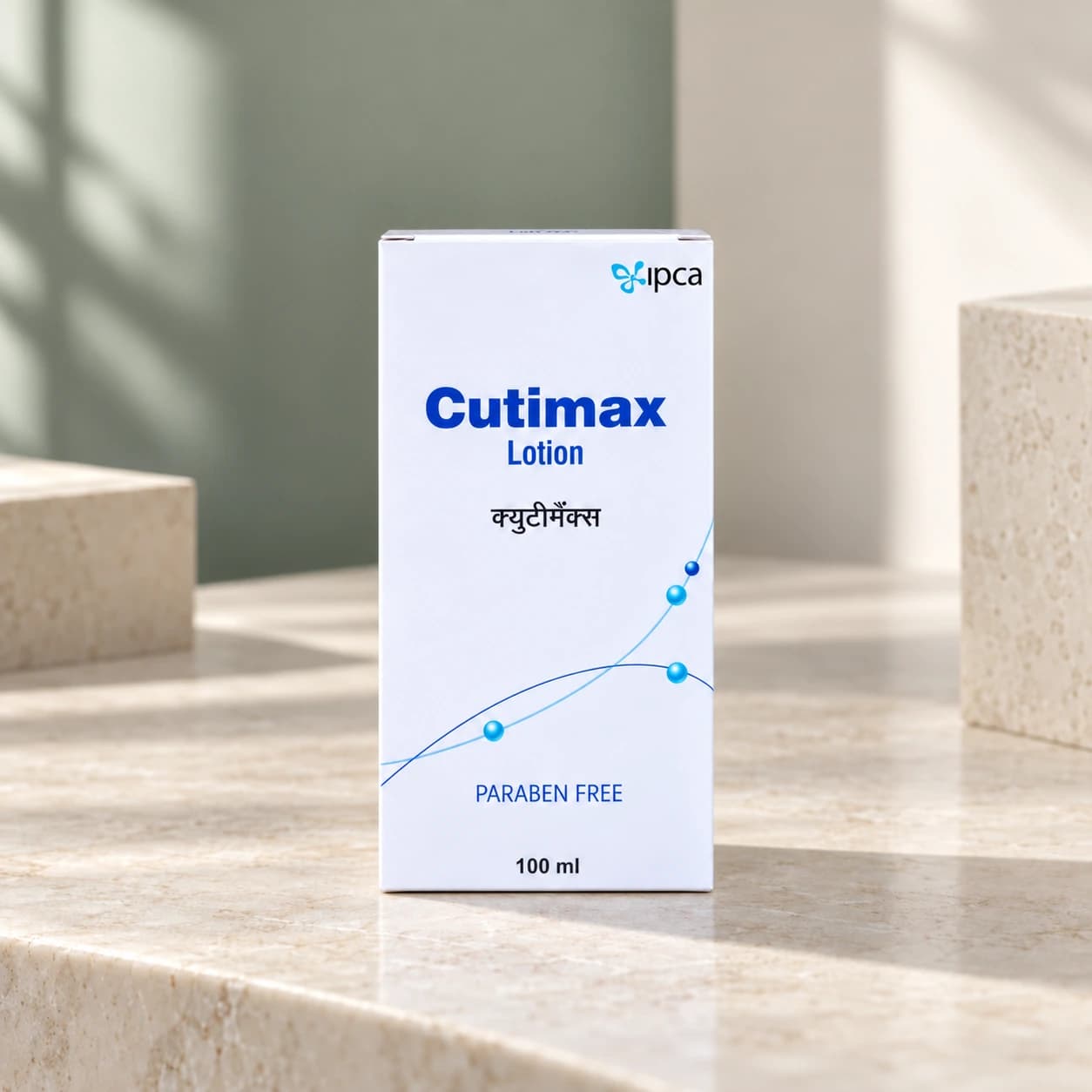
Lotion
Cutimax Lotion
Skin care product. Confirm the formulation, pack size and suitability with the clinic.
₹330View details
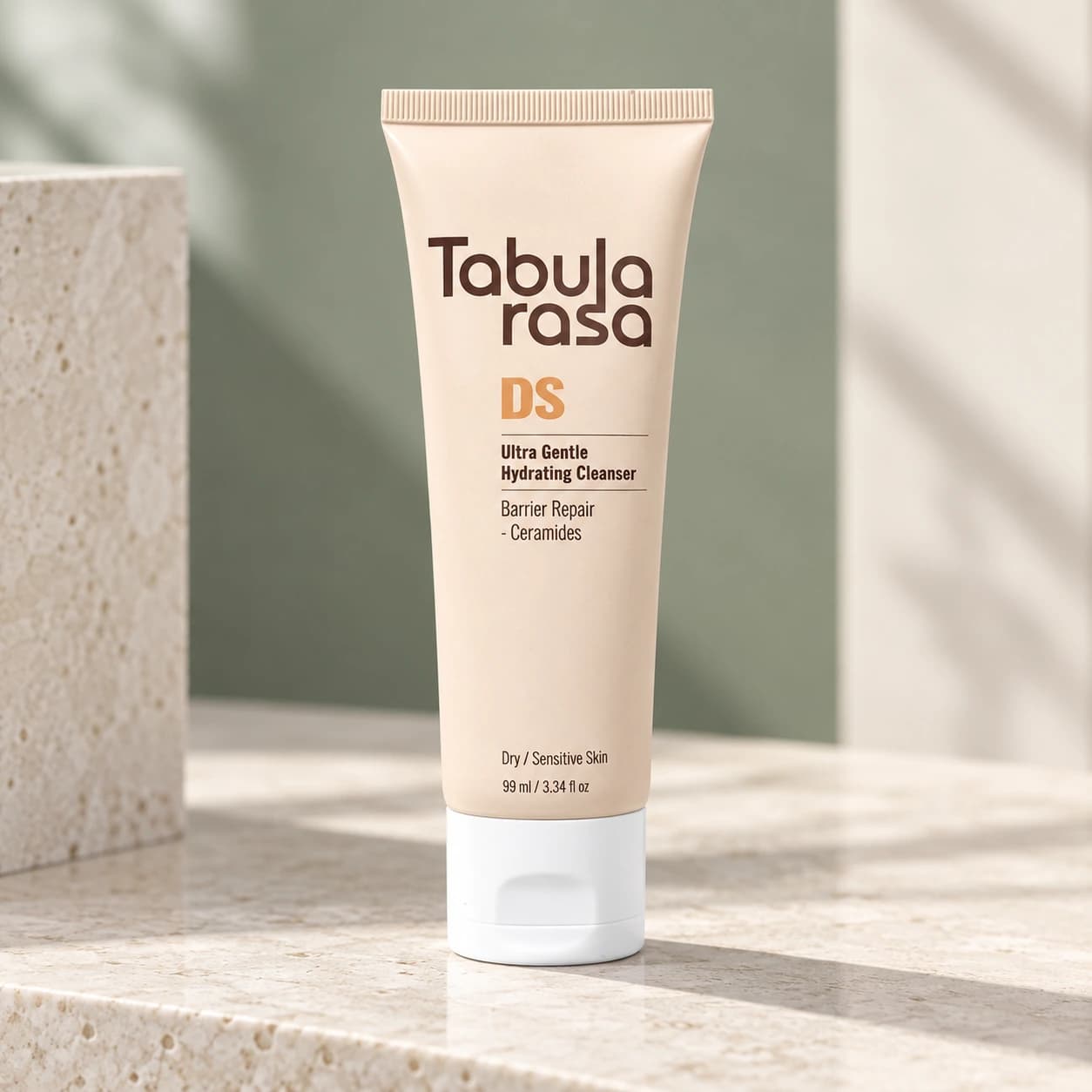
Face wash
Tabula Rasa DS Ultra Gentle Hydrating Cleanser
Facial cleansing product for a clinic-guided skin care routine.
₹540View details
Orders are confirmed on WhatsApp. There is no online payment.
Questions people ask
What is a chemical peel and how does it work?
A chemical peel applies an acid to the skin to loosen and remove its outer layers, which lets newer skin come through. Superficial peels act on the top layer only. Medium-depth peels go deeper and need more recovery. Your doctor chooses the acid, strength and depth for your concern and skin type, and prepares the skin first, because the same peel can behave differently on different skin.
How much does a chemical peel cost in Delhi?
A chemical peel at Clinic Eximus costs ₹2,999 per session. Most plans use a series, so your total depends on how many sessions your doctor advises. Cosmelan is quoted as a protocol, with its home cream, after assessment. Your doctor confirms the plan and final price in writing at consultation, before you commit.
What is the Cosmelan peel, and is it right for melasma?
Cosmelan is a branded depigmentation protocol made by Mesoestetic: a mask applied in clinic, then a cream used at home for weeks, with daily sunscreen. It is used for stubborn pigmentation such as melasma. Published trial evidence for Cosmelan itself is thin, and recovery involves redness and peeling. Whether it suits you depends on pigment depth, skin type and pregnancy plans, so a doctor examines you first.
Is a chemical peel safe for Indian skin?
Superficial peels are considered safe in Indian skin when matched to the person. An Indian guideline advises great caution with medium-depth peels and advises against deep peels. In a review of 473 superficial peels in skin types III to VI, 3.8% had a complication, and all had resolved within eight months. Priming and daily sunscreen lower the risk of dark marks, which is the main concern.
What is the difference between a superficial and a medium-depth peel?
Superficial peels, using acids such as glycolic or salicylic acid, act on the top layer. They suit acne, tan and uneven tone, and downtime is usually short, with mild redness and flaking. Medium-depth peels, such as trichloroacetic acid, work deeper and can mean swelling and peeling for about a week. In Indian skin they carry more risk of dark marks, so doctors use them selectively.
How long is the downtime after a chemical peel?
Superficial peels usually cause mild redness and light flaking that settle within a few days, and many people return to their routine at once. Medium-depth peels and Cosmelan can mean swelling, redness and peeling for a week or longer. Do not pick peeling skin, because that can leave marks or scars, and use sunscreen every day. Your doctor tells you what to expect for your peel.
Which chemical peel is used for acne, pigmentation or tan?
Doctors often use salicylic or glycolic acid peels for acne and acne marks, and superficial peels such as glycolic acid for tan and patchy tone. In a review of 12 trials, no peel was clearly better than another for mild to moderate acne. For melasma, peels are usually a second-line option beside creams and sun protection. A doctor chooses after examining your skin.
How many peels will I need, and how long do results last?
Most plans are a series of peels spaced a few weeks apart, followed by maintenance, because results build with repeat treatment. How long results last depends on the cause. Marks left by acne may stay faded once acne is controlled, while melasma often returns after peels stop, so maintenance creams and daily sunscreen are part of the plan. Your doctor reviews progress against your photographs.
Do I need to prepare my skin before a peel?
Usually yes. Indian guidelines describe priming the skin for 2 to 4 weeks before a peel, with sunscreen and, where a doctor prescribes them, creams such as hydroquinone or tretinoin. Priming helps the peel act evenly, speeds healing and lowers the chance of dark marks. Your doctor tells you what to use and when to stop before the session. Do not start these on your own.
Can I have a chemical peel during pregnancy or breastfeeding?
A doctor decides. Many peel ingredients, and Cosmelan-type protocols, are usually deferred during pregnancy and breastfeeding. Tell your doctor if you are pregnant, breastfeeding or planning a pregnancy. Sun protection and gentle skin care are usually the starting point until it is safe to begin treatment, and your doctor will say when that is.
Read next
Article
Pimple Treatment: Options, What Works, and When to See a Doctor
What helps active acne, what does not, which medicines are a doctor's decision and how to avoid scars. For marks and dips that remain, see acne scar treatment.
Article
Dark Spots on Face: Causes, Types and What Helps
How to tell sun spots, marks left by acne and melasma apart, why depth in the skin matters, and what a doctor may suggest.
Article
Hydrafacial Benefits and Disadvantages: What the Evidence Shows
What a Hydrafacial can and cannot do, how strong the evidence is, the side effects to expect and who should be cautious or wait.

Let a doctor choose the depth.
A doctor looks at your skin and what is behind the concern, then writes a plan with the full price before you begin.
Choose skin care, a centre and a time
Two taps. Nothing is stored on the website.
Your message opens in WhatsApp
You send it yourself and can add anything for the doctor.
The team confirms your visit
Your doctor reviews your history before suggesting anything.
4.9 from 1,238 Google reviews(Delhi centre)Doctor-led since 2004