
GFC hair treatment: what it is, and why one course does not last forever.
GFC, or growth factor concentrate, is made from your own blood and injected into thinning areas of the scalp. It is newer than PRP and has been studied in far fewer people, so here is what is known and what is not.
Two taps, then WhatsApp. A doctor reviews your history before any treatment is suggested.
4.9 from 1,238 Google reviews(Delhi centre)Doctor-led since 2004
GFC Hair Treatment at a glance
- Price
- ₹8,000 per session
- Sessions
- 3 to 4 in published studies
- Interval
- 2 to 4 weeks in studies
- Downtime
- Usually little or none
- When to judge results
- Early check, then 6 months
- Evidence base
- Small studies, 5 to 42 people
What these figures mean
- Price
- Clinic Eximus price; total depends on your course.
- Sessions
- Your doctor sets your schedule after assessment.
- Interval
- 4 weeks in the 2025 comparison; 2 weeks in a 2024 report.
- Downtime
- Mild tenderness for a day or two is common.
- When to judge results
- One study saw gains after the second session.
- Evidence base
- No large randomised trials yet.
Clinic Eximus price. Your doctor confirms the plan and final price at consultation.Updated
The short answer
GFC hair treatment uses growth factors concentrated from your own blood, injected into thinning areas of the scalp. Small studies, of 5 to 42 people, report gains in hair density, and one found faster early improvement than PRP. Because the evidence is limited, GFC is offered as an add-on to medical treatment for suitable people, not a replacement.
Is GFC treatment for hair right for you?
Often suits
- Men and women with pattern hair loss whose follicles are thinning but still present.
- People on medical treatment, such as topical minoxidil, who want to discuss an in-clinic add-on.
- People who have tried PRP and want to discuss an alternative, accepting that the comparison evidence is limited.
- Anyone comfortable starting a treatment with a smaller evidence base, with a clear review point agreed in advance.
May not suit
- Areas of scalp that have been bald for a long time, where follicles no longer produce hair.
- People with certain blood or platelet disorders.
- People taking blood-thinning medicines. Ask your doctor first, and do not stop any medicine on your own.
4 more reasons
- An active scalp infection, open wounds, or a flare of scalp skin disease in the area to be treated.
- Pregnancy or breastfeeding, when in-clinic hair treatment is usually deferred.
- Hair loss whose cause has not been assessed yet, such as shedding after illness, a thyroid problem or low iron.
- Anyone looking for a single treatment that ends hair loss without ongoing care.
How GFC hair treatment works
GFC stands for growth factor concentrate. Like PRP, it starts with a small sample of your own blood. The difference is in preparation: the blood is typically processed so that the platelets release their growth factors before injection, and the concentrate is separated from the red cells. The aim is to deliver growth factors directly, rather than relying on platelets to release them once inside the scalp. These growth factors are thought to support follicles that are shrinking in pattern hair loss, helping them stay in the growth phase and produce thicker hair. As with PRP, GFC does not alter the hormone sensitivity behind pattern hair loss and cannot revive follicles that have stopped working entirely. Preparation methods and kits vary between clinics, and studies have not shown that any one method works better than another.
- Growth-factor-rich fluid (used for GFC)
- Cells left behind
- Blood collected in a kit tube
- Platelets activated, growth factors released
- Cell-poor, growth-factor-rich fluid separated
How care runs at Clinic Eximus
The same order for everyone, so nothing is decided before the cause is clear.
Step 1
Consultation and history
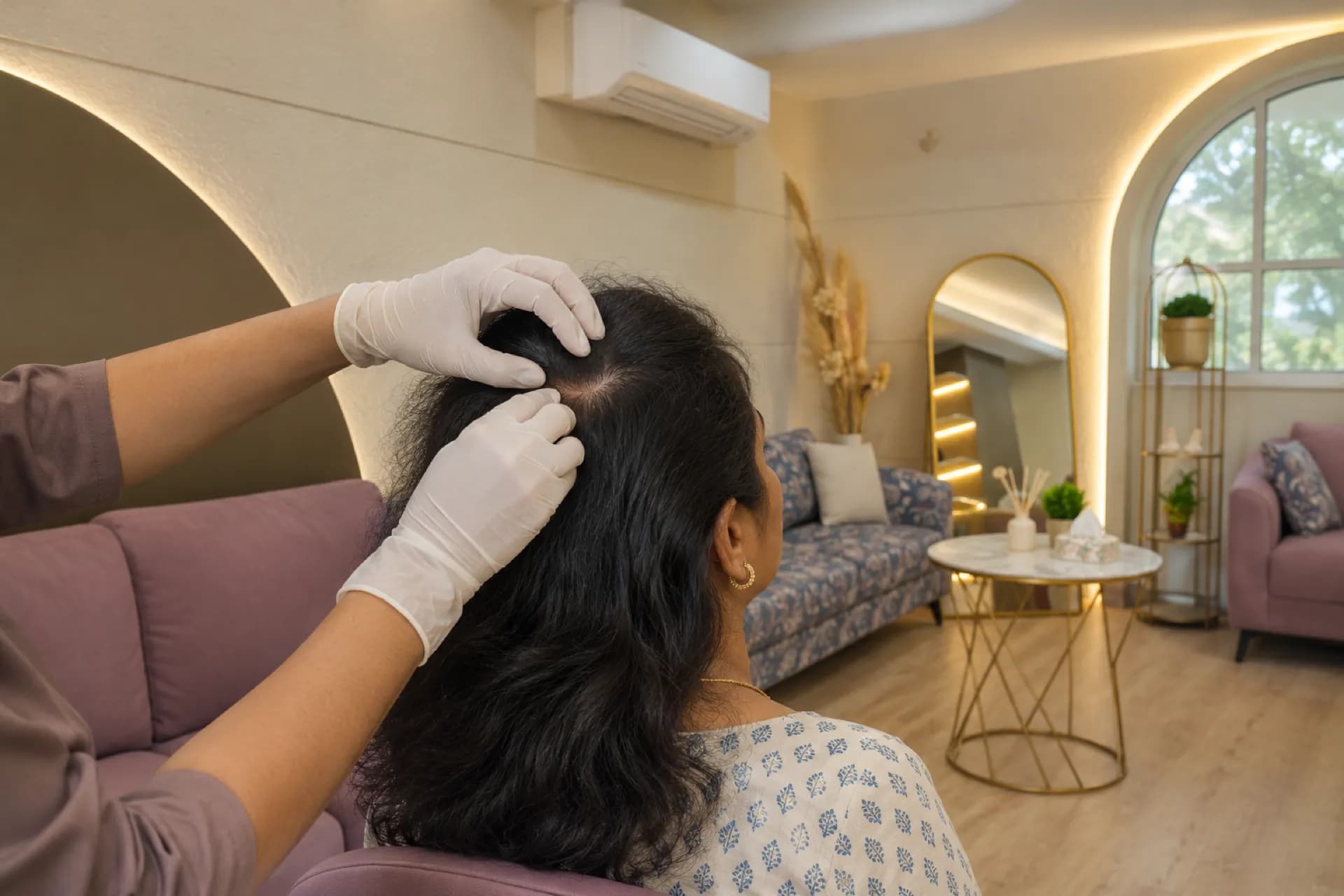
Your doctor asks about the timeline of your hair loss, your health and medicines, family history, and what you have already tried, including any PRP or GFC elsewhere.
Step 2
Scalp examination and trichoscopy
A magnified scalp examination confirms the pattern, checks for other conditions and records a photographic baseline to compare against later.
Step 3
Tests where needed
If your history suggests another cause, such as thyroid disease, low iron or recent illness, your doctor may suggest blood tests before any in-clinic treatment.
Step 4
A written plan with the price
If GFC suits you, you receive a written plan: the medical treatment it sits alongside, the number of sessions to start with, the per-session price and the review point.
Step 5
Treatment and review
Sessions are spaced a few weeks apart. Progress is compared with your baseline photographs, and the plan is continued, changed or stopped depending on how you respond.
What the research says
Published studies and guidelines, linked so you can read them yourself. Evidence is not a promise for any one person.
42 people. In a retrospective study of 42 people with male or female pattern hair loss (17 GFC, 25 PRP), each given 3 sessions 4 weeks apart, GFC improved hair count significantly after the second session and gave quicker early gains. At 6 months, PRP showed better hair diameter and overall improvement scores. (Garg and Thirumalaiswamy, Dermatologic Surgery (PubMed 40557953), 2025) opens in a new tab
5 people. A report of 5 men given 4 GFC sessions 2 weeks apart described higher hair density on trichoscopy at 8 weeks, with no infections, redness or itching at injection sites. With 5 people and no comparison group, it shows the approach is feasible, not that it works for most people. (Growth factor concentrate regimen for hair loss, case series (PMC11283646), 2024) opens in a new tab
Medicines first. Guidelines for pattern hair loss list topical minoxidil and, for suitable men, 5-alpha reductase inhibitors such as finasteride among the core medical treatments, with trichoscopy used to diagnose and monitor progress. (Italian guidelines adapted from EDF/EADV, androgenetic alopecia in women and men (PubMed 33295740), 2020) opens in a new tab
We will tell you if GFC is not the right first step for you.
Your first six months
Typical milestones from published studies and guidelines. Your doctor sets your own schedule.
Week 0
Consultation, scalp check and any tests
First weeks
3 to 4 sessions, 2 to 4 weeks apart in studies
After session 2
Early check, when one study saw gains
Month 6
Review against your starting photos

What to expect
- GFC evidence is thin. The published studies involve between 5 and 42 people, and none is a large randomised trial.
- Early change may come sooner than with PRP, based on one study, but that study also found PRP ahead on hair diameter at 6 months.
- Response varies, and some people see little change. A review point agreed in advance helps you decide whether to continue.
- Pattern hair loss continues over time, so medical treatment usually remains the base of the plan and any GFC benefit needs ongoing care to hold.
- GFC does not regrow hair on scalp that has been bald for a long time.
Side effects and safety
- Tenderness, mild swelling or pinpoint bleeding at injection sites for a day or two is common.
- In the 2025 comparison, GFC caused less scalp redness than PRP. A 2024 report of 5 men noted no infections or redness at injection sites.
- Because GFC has been studied in few people, rarer side effects may not yet be known.
- Tell your doctor about any blood-thinning medicine, supplement or bleeding problem before your session.
- Contact the clinic if you notice spreading redness, warmth, pus or a fever after treatment.
GFC hair treatment cost in Delhi
₹8,000
per session
Clinic Eximus price. Your doctor confirms the plan and final price at consultation.
What changes the cost
- The number of sessions in your starting course, and whether maintenance is planned.
- The preparation kit used, which varies in cost and is the main reason GFC costs more than PRP.
- The size of the area being treated.
- Whether GFC is combined with PRP or another in-clinic treatment in the same plan.
- Your medical treatment, such as minoxidil, which is a separate cost.
Pairs with this care
Care to use between visits, chosen by the clinic. Confirm the right one with a doctor.
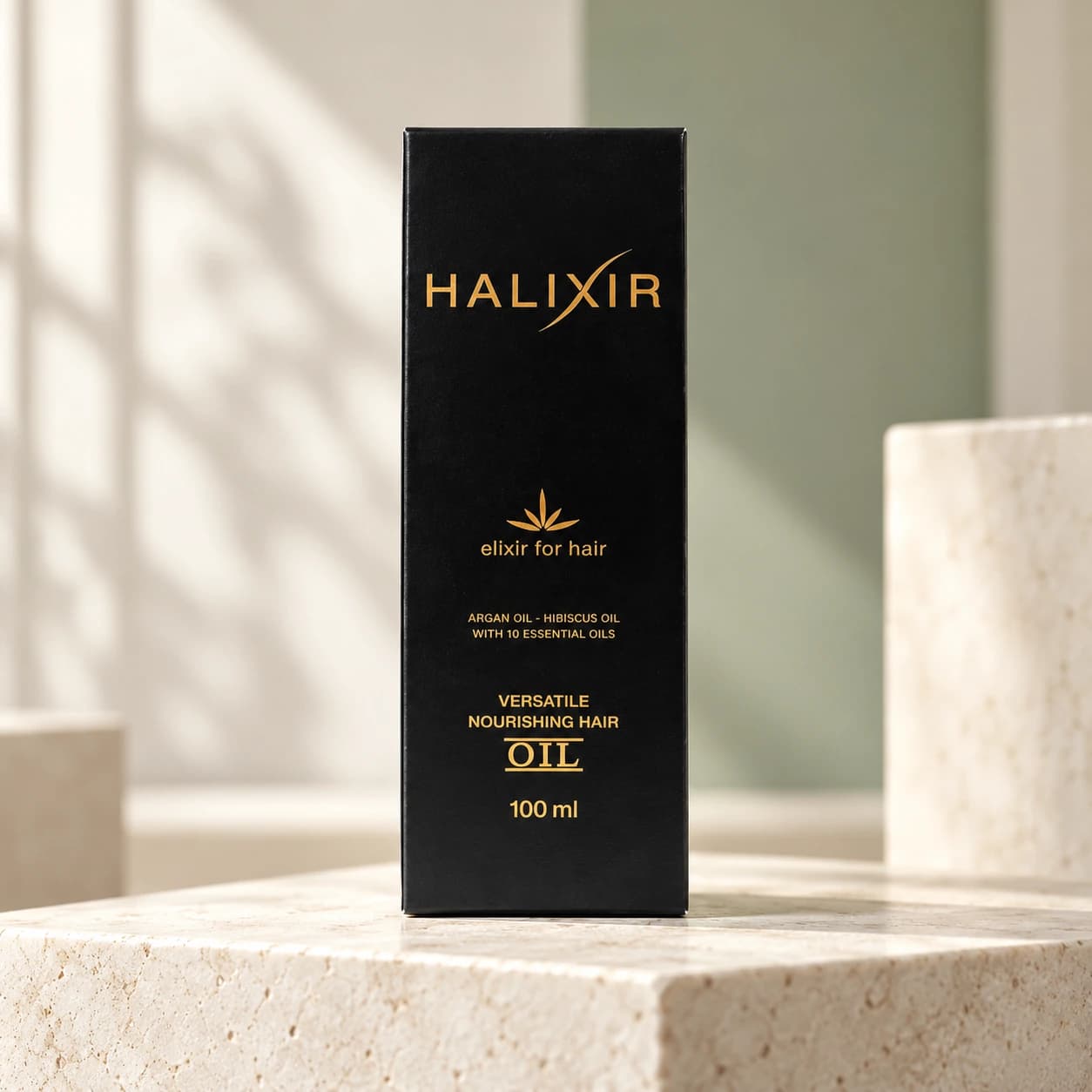
Oil
Halixir Hair Oil
Hair and scalp care product. Confirm the formulation and clinician-advised use.
₹355View details
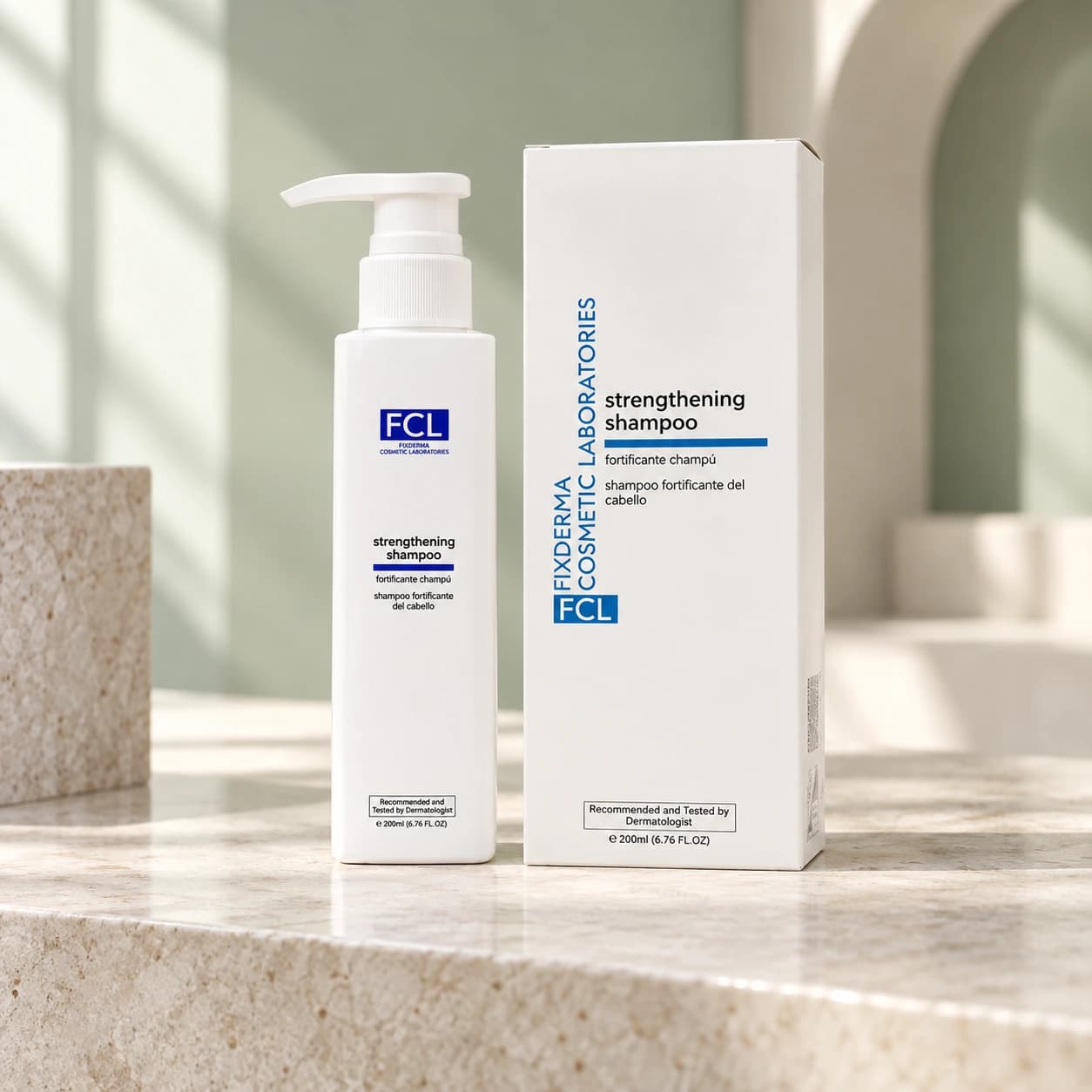
Shampoo
FCL Strengthening Shampoo
Shampoo for cleansing the hair and scalp. Check the current pack for ingredients and directions.
₹900View details
Orders are confirmed on WhatsApp. There is no online payment.
Questions people ask
Does GFC really regrow hair?
It may help some people with pattern hair loss, but the evidence is limited. Small studies of 5 to 42 people report gains in hair density and hair count, and one found improvement after the second session. None is a large randomised trial. GFC does not regrow hair where follicles have stopped working, and it works alongside medical treatment rather than replacing it.
What is the cost of GFC treatment for hair?
GFC for hair at Clinic Eximus costs ₹8,000 per session. Your total depends on the number of sessions, the area treated and any maintenance. Your doctor confirms the plan and final price in writing at consultation.
How is GFC different from PRP?
Both start with your own blood, but they are prepared differently. PRP concentrates platelets, which release growth factors once injected. GFC is processed so the growth factors are released beforehand and separated out. A 2025 study found GFC gave quicker early gains, while PRP did better on hair diameter at 6 months. Our PRP and GFC comparison covers this in more depth.
What is the gap between GFC sessions?
Published studies have spaced GFC sessions 2 to 4 weeks apart, usually for 3 or 4 sessions. The 2025 comparison used 3 sessions 4 weeks apart; a 2024 report used 4 sessions 2 weeks apart. There is no single agreed schedule. Your doctor sets yours after examining your scalp, then reviews your progress before planning any further sessions.
What are the side effects of GFC therapy?
The usual effects are mild and short-lived: tenderness, slight swelling, pinpoint bleeding or a headache after the injections. In a 2025 comparison, GFC caused less redness than PRP. Because GFC has been studied in few people, rarer side effects may not yet be known. People with certain blood disorders, an active scalp infection or a pregnancy should not have it.
Should I stop minoxidil or finasteride during GFC?
Usually not. GFC is meant to sit alongside medical treatment, not replace it, and stopping a medicine that is working can let pattern hair loss resume within months. Do not stop or change any prescribed medicine on your own. If anything needs pausing around a session, your doctor will tell you what and for how long.
Will I need GFC sessions forever?
Not necessarily, but any benefit is unlikely to hold without ongoing care. Pattern hair loss continues over time, so most plans rely on medical treatment as the base and treat GFC as an optional add-on. Some people are offered occasional maintenance sessions; others stop if review shows little benefit. Long-term data on GFC is very limited.
Read next

Article
GFC Results: How Long They Last and Why They Are Not Permanent
What GFC hair treatment results look like, when to judge them, how they compare with PRP over six months, and why ongoing treatment matters.

Article
PRP vs GFC for Hair Loss: An Honest Comparison
Both are made from your own blood and injected into the scalp. Here is how they differ, what the studies found, and where they fit in a plan.

Article
Minoxidil for Hair Loss: What to Expect
What topical minoxidil does, what trials found in men and women, why shedding can rise at first, and why it needs to be continued.

Find out whether GFC fits your plan.
A doctor checks why your hair is changing, then writes a plan with the full price before you begin.
Choose hair care, a centre and a time
Two taps. Nothing is stored on the website.
Your message opens in WhatsApp
You send it yourself and can add anything for the doctor.
The team confirms your visit
Your doctor reviews your history before suggesting anything.
4.9 from 1,238 Google reviews(Delhi centre)Doctor-led since 2004