
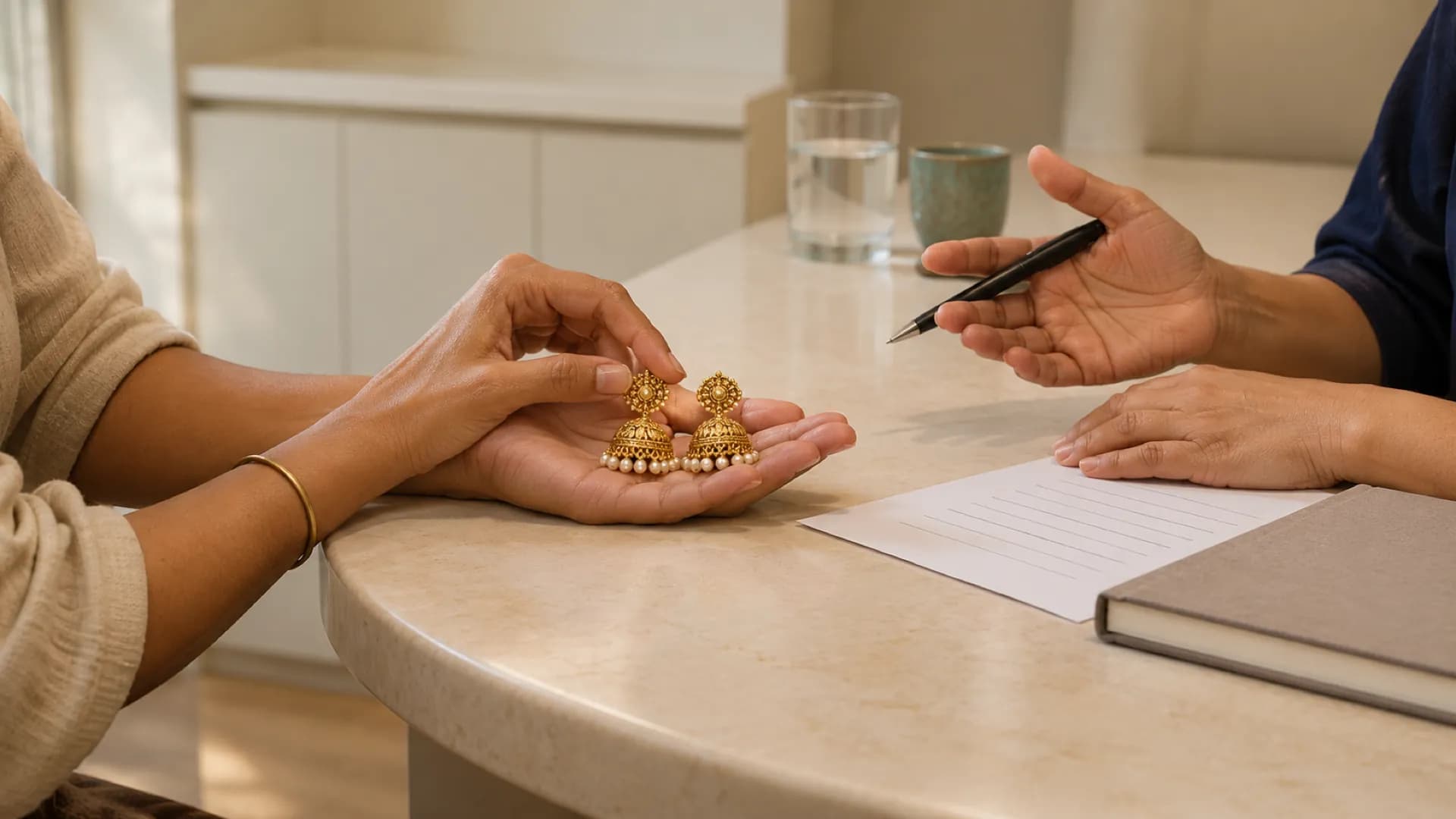
Ear lobe repair: mending a torn or stretched earlobe.
A short procedure under local anaesthetic closes a torn, split or stretched lobe, and a new piercing can be considered once it has healed. A doctor checks the cause and any keloid history first.
Two taps, then WhatsApp. A doctor reviews your history before any treatment is suggested.
4.9 from 1,238 Google reviews(Delhi centre)Doctor-led since 2004
Ear Lobe Repair at a glance
- The procedure
- Minor, under local anaesthetic
- Time
- Under an hour
- Stitches
- Out or dissolved in 1 to 2 weeks
- Back to routine
- Usually the next day
- Re-piercing
- Wait about 1 to 6 months
- What sets the cost
- Quoted per ear or for both
What these figures mean
- The procedure
- American Society of Plastic Surgeons: usually an office procedure, and both lobes can often be done at one visit.
- Time
- Cleveland Clinic. You go home the same day.
- Stitches
- Dissolving or removable stitches, as your surgeon chooses.
- Back to routine
- American Society of Plastic Surgeons. Soreness and bruising settle over a few days.
- Re-piercing
- Sources differ: about a month, at least 3 months, and 3 to 6 months. Your surgeon sets the date.
- What sets the cost
- No indicative range yet. It depends on the size of the tear, one or both ears and the setting.
Updated
The short answer
Ear lobe repair is a minor procedure that closes a torn, split or stretched earlobe, usually under local anaesthetic in under an hour. The lining of the gap is trimmed and the lobe is stitched back together in layers, and a fine scar remains. A new piercing can be considered after healing, at a time your surgeon sets. People who form keloid scars need a different conversation first.
Is ear lobe repair right for you?
Often suits
- Adults with an earlobe torn by a heavy earring, a snag or an injury, or a hole stretched by heavy earrings or gauges.
- People who want the lobe closed or reshaped, or made ready for a new piercing, and who accept a fine scar.
- People in good health whose lobe is not currently red, swollen or infected.
May not suit
- Anyone who has formed a keloid, a raised scar that grows past the wound, after a piercing or a cut. A doctor assesses this first, because surgery can set one off and keloids often return.
- A lobe that is red, swollen or infected. It is treated first, and repaired later.
- Wanting to be re-pierced straight away through the same place. A scar is weaker than the rest of the lobe, so a new hole goes beside it, not through it.
2 more reasons
- Diabetes, smoking or medicines that affect bleeding. These are reviewed at the first visit and can change the plan.
- A metal allergy that has not been identified. One study linked split lobes to allergy to the metal in earrings, so the cause is worked out to lower the chance of a repeat tear.
How a torn or stretched earlobe is repaired
The earlobe is skin over soft tissue, with no cartilage in it. That is why a heavy earring can slowly drag the hole into a slit, and why a sudden snag can tear it right through. Once skin has healed along the edges of the gap, stitching the two sides together does not work, so the surgeon trims the lining of the gap away to make fresh edges and closes the lobe in layers. A small defect can be closed by removing the lining and stitching it, while a larger stretched hole, in one study anything over about 15 mm, usually needs more skin removed and the lobe rotated. Many techniques are described, and the choice follows the size of the defect and your surgeon's judgement. A long or sagging lobe is a related question, and a doctor can discuss reshaping at the same visit.
1. Torn or stretched
The hole has stretched into a slit, or torn through the lower edge. Skin has healed along the edges of the gap, so it cannot simply be pressed back together.
2. Edges trimmed
The surgeon removes the healed lining of the gap, shown by the dashed line, leaving fresh edges that can join.
3. Closed in layers
The lobe is stitched back together in layers, leaving a fine line. A new piercing, once healed and if your surgeon agrees, goes beside the scar and not through it.
- Lining trimmed away
- Fine scar
- Where a new piercing could go
A schematic, not to scale. Several techniques exist, and a larger stretched hole usually needs more skin removed and the lobe rotated. Your surgeon chooses the technique and tells you when a new piercing could be considered. This is general guidance, not a plan for your lobe.
How care runs at Clinic Eximus
The same order for everyone, so nothing is decided before the cause is clear.
Step 1
Consultation
Your doctor looks at the lobe, asks how it tore or stretched and which earrings you wear, and asks about metals that irritate you, keloids, diabetes and smoking.
Step 2
A written plan
You are told whether one or both lobes need repair, the technique, the likely scar, the risks, the cost and when a new piercing could be considered, and you have time to decide.
Step 3
The repair
A thin needle numbs the lobe, the lining of the gap is trimmed, and the lobe is stitched in layers. It is a day procedure and you go home the same day.
Step 4
Healing and re-piercing
Stitches dissolve or come out in a week or two. You are checked, and your surgeon tells you when a new piercing could go in, beside the scar and not through it.
What the research says
Published studies and guidelines, linked so you can read them yourself. Evidence is not a promise for any one person.
Local anaesthetic · back next day. The American Society of Plastic Surgeons describes earlobe repair as usually an outpatient procedure under local anaesthetic in the office, with both lobes often done at the same visit. Most people are back at work the next day, a fine scar remains when healed, and surgeons typically ask people to wait at least three months before re-piercing, with the new hole at least 3 mm from the old site. (American Society of Plastic Surgeons: what is earlobe repair?, 2021) opens in a new tab
Stitches out in 1 to 2 weeks. A 2025 article from the same society describes trimming the excess tissue and stitching what remains, layer by layer, with stitches in for about one to two weeks. It says re-piercing can be cleared after about a month, but not through the scar, which is weaker than the rest of the lobe. Other sources give longer waits, so timing is your surgeon's decision. (American Society of Plastic Surgeons: a simple solution to torn and stretched earlobes, 2025) opens in a new tab
Under 1 hour · weeks to heal. Cleveland Clinic says a repair takes less than an hour and uses a thin needle for local anaesthetic, with stitches that dissolve or come out in a week or two. It says full healing can take several weeks, advises waiting on average three to six months before re-piercing, and lists asymmetry, bleeding, infection, numbness, scarring, sensitivity and skin discolouration as possible problems. (Cleveland Clinic: earlobe repair, 2025) opens in a new tab
6 more studies
26 studies · six techniques. A systematic review of 26 studies (1973 to 2019) grouped traumatic earlobe repairs into six technique types, from straight-line closure to Z-plasty and flaps. It judged complication rates and morbidity to be relatively low, found the highest infection rate, 11.5%, with Z-plasty, and concluded that the technique should follow surgeon and patient preference. (Outcomes and complications of traumatic ear lobe repair techniques: a systematic review, Journal of Cosmetic Dermatology (PubMed 33983669), 2022) opens in a new tab
53 people · 10.8–12.5% minor. In 53 people who had stretched (gauged) earlobes repaired at one hospital, minor complications occurred in 12.5% after the simpler closure used for smaller defects (about 12 mm on average) and 10.8% after the excision and rotation used for larger ones (about 29 mm). The authors say a significant number of people need minor revisions. It is retrospective and from one centre. (Repair of gauged earlobes: case series and review of two techniques according to size, Journal of Cutaneous and Aesthetic Surgery (PubMed 34908779), 2021) opens in a new tab
92 people · recurrence was high. In a study of 25 people with a split earlobe, 17 with a stretched lobe and 50 controls wearing gold earrings, the authors concluded that stretching comes from the constant pull of heavy earrings, while splitting may relate to allergy to the metal. Recurrence after repair was high, and they advised avoiding the metal that caused it. It is an older, small study. (The mystery of the split earlobe, Plastic and Reconstructive Surgery (PubMed 15577366), 2004) opens in a new tab
13 studies · recurrence 9–18%. Across 13 studies of ear keloids that had already come back once, recurrence after excision plus an added treatment ranged from 9% to 18%, with no statistically significant difference between brachytherapy, compression, radiation and steroid injections. Evidence quality was low to moderate, so keloid-prone people are assessed before any repair or new piercing. (What do we know about treating recalcitrant auricular keloids? A systematic review and meta-analysis, Plastic Surgery (PubMed 35096693), 2022) opens in a new tab
No randomised trials found. A 2025 review of earlobe deformities found no randomised trials. It describes surgery, laser, fat injection and fillers for lobes that are long, sagging or have lost volume, and says the right choice follows a proper diagnosis of what has changed. (Esthetic and reconstructive options for earlobe deformities, Journal of Cutaneous and Aesthetic Surgery (PubMed 40027536), 2025) opens in a new tab
Pus, heat, fever: see a doctor. NHS guidance lists swelling, pain, heat, marked redness or darkening, blood or pus, and feeling unwell as signs of an infected piercing, and advises getting medical help promptly and leaving jewellery in unless a doctor says to take it out. It also advises using a qualified, licensed piercer and never piercing yourself, and notes small lumps called granulomas can form around ear or nose cartilage piercings. (NHS: infected piercings, 2023) opens in a new tab
We will tell you if ear lobe repair is not the right first step for you.
From a torn lobe to a new piercing
Typical milestones from published studies and guidelines. Your doctor sets your own schedule.
Before
Examination, history and a written plan
Day 0
Local anaesthetic, repair, then home the same day
Days 1 to 3
Soreness and bruising; usually back to routine
Weeks 1 to 2
Stitches out or dissolved; lobe checked
Months 1 to 6
Re-piercing only when your surgeon agrees
What to expect
- A scar always remains. It is usually fine and hard to see, and how it looks depends on your skin.
- Some people need a small touch-up for unevenness. Minor complications were reported in about 11% to 13% of people in one study of stretched lobes.
- A repaired lobe can tear or stretch again if heavy earrings are worn again, and in one older study recurrence after repair was high where metal allergy was involved. Lighter earrings in a metal you tolerate lower the chance.
- Re-piercing waits for healing. Medical sources give waits from about one month to six, and the new hole sits beside the scar, not through it.
Side effects and safety
- Common effects are numbness, soreness and bruising for a few days. Cleveland Clinic lists asymmetry, bleeding, infection, numbness, scarring, sensitivity and skin discolouration as possible problems.
- A scar from the repair, or from a new piercing, can in some people grow into a keloid. Tell your doctor if you or your family have formed keloids. Indian skin is also more likely to darken along a scar, so say how your skin marks.
- Infection is uncommon, but the highest rate in a review was 11.5% with one technique. Heat, swelling, pus, a spreading red or dark area or fever need prompt medical help.
- Tell your doctor about diabetes, smoking, blood-thinning medicines and any metal that irritates your skin.
- Do not pull or snag the lobe while it heals, and call the clinic if the wound opens or the stitches come away.
Ear lobe repair cost in Delhi
Your cost depends on the cause and the plan your doctor writes, which shows the full price before you begin.
What changes the cost
- Whether one lobe or both are repaired, since both can often be done at one visit.
- How large the tear or stretch is and which technique it needs. A lobe stretched to a large size may need a bigger repair.
- Whether any reshaping of the lobe is added.
- The setting and anaesthesia in your written plan, and the check-up visits. Ask what the quote includes, and whether a new piercing is part of it.
Questions people ask
How much does ear lobe repair cost in Delhi?
Ear lobe repair is a small procedure, and the cost is usually quoted for one ear or for both, so ask which. Published Delhi prices vary too widely, and on different bases, for an honest range, so none is printed here. The price depends on the size of the tear, one or both lobes, any reshaping and the setting. Clinic Eximus confirms the plan and price in writing after you are examined.
How long does ear lobe repair take, and is it painful?
A repair usually takes under an hour under local anaesthetic, so you are awake but the lobe is numb. The anaesthetic needle stings briefly. Afterwards expect soreness, swelling and bruising for a few days, and most people return to normal activity the next day. Stitches come out or dissolve in one to two weeks, and the lobe takes several weeks to heal fully.
When can I get my ears pierced again after repair?
Only once the lobe has healed, and sources differ. The American Society of Plastic Surgeons has given about a month in one article and at least three months in another, while Cleveland Clinic says three to six months. The new hole should sit beside the scar, not through it, because scar tissue is weaker. Your surgeon sets your date, so wait for it.
Can a torn earlobe heal on its own?
Not once the skin has healed along the edges of the split, because the two sides will not join again by themselves. That is why the repair trims the lining of the gap first. A hole that is only stretched is a separate question, and a doctor examines the lobe and tells you whether repair is needed, whether it can wait, or whether lighter earrings are enough.
Can I wear heavy earrings after ear lobe repair?
Heavy earrings are what usually damaged the lobe, so the risk of a repeat tear returns if you go back to them. A study of 25 people with split lobes and 17 with stretched lobes linked stretching to the constant pull of heavy earrings and splitting to metal allergy, and advised avoiding the metal. Ask your surgeon which weight and metal are sensible, and keep heavy pieces for short occasions.
Can keloids form after ear lobe repair or ear piercing?
Yes, in some people. A keloid is a raised scar that grows beyond the original wound, and the earlobe is a common site after piercing. Tell your doctor before any repair or new piercing if you have formed one, because surgery can set another off and keloids often return. In ear keloids that had recurred once, recurrence after excision plus another treatment ranged from 9% to 18%.
Is this page about ear piercing or nose piercing?
Only the clinical side. Ear piercing is mostly searched for shops, jewellery and styles, which we do not cover. What a doctor can help with is infection after a piercing, a lump or keloid, a torn lobe and a metal allergy. NHS advice for a new piercing is to use a qualified, experienced, licensed piercer and never to pierce yourself.
What should I do if my ear or nose piercing looks infected?
See a doctor promptly. NHS signs of infection are swelling, pain, heat, marked redness or darkening, blood or pus, and feeling hot, shivery or unwell. The NHS says an infected piercing can be serious if not treated quickly, and advises leaving the jewellery in unless a doctor says to remove it. Treatment may be a cream, ointment or antibiotic tablets, as a doctor decides.
Is ear lobe repair the same as ear surgery?
No. Ear lobe repair mends a torn or stretched lobe, a small procedure on soft tissue. Surgery to reshape or pin back prominent ears, called otoplasty, works on cartilage and is a separate consultation, so it is not covered on this page. If that is your question, tell us when you book, and the doctor will take it as its own conversation.
Can a large or sagging earlobe be reshaped?
Sometimes, and it is a separate question from a tear. A 2025 review found no randomised trials and described surgery, fat injection and fillers for lobes that are long, sagging or thin, with the choice depending on a proper diagnosis. A doctor examines the lobe, tells you what is reasonable and can discuss reshaping at the same visit as a repair.
Read next
Article
Gynecomastia Surgery Side Effects and Recovery
What is normal in the first weeks, which complications to watch for, how long the compression garment lasts, and what studies say about scars and recurrence.

Article
Liposuction vs Tummy Tuck: What Is the Difference?
The difference between removing local fat and tightening abdominal muscle and loose skin, explained plainly.

Start with how it tore, then plan the repair.
A doctor assesses your concern first and explains your options, risks and the full price in writing before you decide.
Choose aesthetic care, a centre and a time
Two taps. Nothing is stored on the website.
Your message opens in WhatsApp
You send it yourself and can add anything for the doctor.
The team confirms your visit
Your doctor reviews your history before suggesting anything.
4.9 from 1,238 Google reviews(Delhi centre)Doctor-led since 2004